
Home › Products › Low pressure valves › Flange end ball valves
6 variants · ANSI, JIS and EN · ready stockFlange end ball valves, 1/2" to 6", ANSI · JIS · PN
Flanged quarter‑turn ball valves in six variants — ANSI Class 150 and 300, JIS 10K and PN10/16, in SS316 or cast carbon steel A216 WCB. Each is built to its own design standard, and that standard is what decides whether the valve bolts to your pipework. This page exists to get you to the right one.
Get a quotation within 2 working hours
Send the part number, standard, size or quantity. Stock in Malaysia or Singapore, ISO 9001:2015 certified.
Why flanged, and why the standard matters more than anything else
A flange that does not match is a valve you cannot fit.
A flange end ball valve does the same job as a threaded ball valve — a quarter‑turn shut‑off with a drilled ball — but it bolts into the line through a pair of flanges rather than screwing in. That buys you three things: it goes to larger sizes than a threaded body sensibly can, it comes out of the line without cutting or unscrewing pipework, and it is the normal arrangement on plant where valves are expected to be removed for service.
It also introduces the one constraint that governs everything on this page. The flange has to match the flange it bolts to — the same bolt circle, the same number of holes, the same hole diameter, the same raised face. That is set by the flange standard, and the four here are not interchangeable. An ANSI 150 valve will not bolt to a JIS 10K flange, and neither will bolt to a PN16 one.
- ⚠ Get the flange standard from the pipework, not from the pressure. ANSI 150 and JIS 10K are close in pressure — both around 1.6 to 2 MPa — but their bolt circles differ, so they do not mate. Measure or check the existing flange before ordering. All four standards side by side.
- Every variant is built to a different design standard. API 608, ANSI B16.34, API 6D, JIS B2071 and EN 1983 all appear across the six. If your specification names one of those, it names the variant. The full stack.
- ⚠ The cast steel variants are not stainless valves. The body is A216 WCB cast carbon steel and the ball and stem are 304, not 316. Corrosion resistance is well below the SS316 variants. The difference.
- Each variant publishes its own test pressures — shell, seat and gas‑tightness — and they scale with class: 3.0 MPa shell at Class 150 against 7.8 MPa at Class 300. The figures.
- Threaded instead? For 1/8" to 4" screwed or weld‑end valves, see ball valves — eight variants including three‑way L and T‑port.
All six flange end ball valves, side by side
Flange standard first, then material. That is the order the decision happens in.
| Variant | Flange | Size | Body material | Trim | Shell test | Choose it when |
|---|---|---|---|---|---|---|
| ANSI 150 SS316 | ANSI 150# | 1/2"–6" | SS316 | SS316 | 2.4 MPa | The default for corrosive or clean‑fluid duty on ANSI pipework. All‑stainless, widest size range. |
| ANSI 150 cast steel | ANSI 150# | 3/4"–6" | A216 WCB | 304 | 3.0 MPa | Non‑corrosive duty on ANSI pipework where cost matters. Carbon steel body, 304 trim — not a stainless valve. |
| ANSI 300 SS316 | ANSI 300# | 1/2"–6" | SS316 | SS316 | 6.0 MPa | Higher pressure on ANSI pipework, in stainless. Built to API 6D. |
| ANSI 300 cast steel | ANSI 300# | 1 1/2"–6" | A216 WCB | 304 | 7.8 MPa | The highest shell test in the range. ⚠ But its published temperature ceiling is 100 °C, not 150. |
| JIS 10K SS316 | JIS 10K | 1/2"–6" | SS316 | SS316 | 3.0 MPa | Japanese‑standard pipework. Will not bolt to ANSI even though the pressure is similar. Built to JIS B2071. |
| PN10/16 SS316 | PN10/16 | 3/4"–6" | SS316 | SS316 | 2.4 MPa | European pipework. 16 bar nominal, built to EN 1983 with EN 1092‑1 flanges. |
- ⚠ Start with the flange, not the pressure. Four incompatible flange standards sit in this table. ANSI 150, JIS 10K and PN10/16 are all around 1.6–2 MPa and none of them bolts to another. Choosing on pressure alone is how the wrong valve gets ordered.
- ⚠ Cast steel is the odd one out on material. Both cast‑steel variants have an A216 WCB body with 304 ball and stem. The four SS316 variants are stainless throughout. If the fluid or the environment is at all aggressive, that is the whole decision. Side by side.
- ⚠ ANSI 300 cast steel publishes a 100 °C ceiling. Every other variant here states −29 °C to 150 °C. We publish it as the manufacturer does and flag it — if you need 150 °C at Class 300, ask us to confirm before ordering.
- Shell test pressure is roughly 1.5× the class rating and it doubles between Class 150 and Class 300. It is a manufacturing proof test, not a working pressure — do not design to it. All six sets of figures.
- Two variants do not start at 1/2". ANSI 150 cast steel and PN10/16 begin at 3/4", and ANSI 300 cast steel begins at 1 1/2". Below those, use an SS316 variant or a threaded valve.
- None of these six is short. A flange end ball valve carries its own two flanges, so at 4" it needs roughly 394 mm of pipe. If the gap in your run is smaller than that, the PN16/PN40 SS316 wafer type puts the same ball‑and‑PTFE‑seat internals into 152 mm by bolting between your flanges instead — and it is the only one here with a published ISO 5211 actuator pad.
The standards each variant is built to
If your specification names a standard, this table names the valve.
On a flanged valve the standards are not paperwork — they are the dimensions. The design standard sets the construction and testing, the face‑to‑face standard sets the length between flange faces so the valve fits the gap in the pipe run, and the flange standard sets the drilling. All three have to be right.
| Variant | Design and manufacture | Face‑to‑face | Flange ends |
|---|---|---|---|
| ANSI 150 cast steel | API 608 | ASME B16.10 | Wall thickness to ASME B16.34 |
| ANSI 150 SS316 | ANSI B16.34 | GB/T 12221 | GB/T 9113.1 |
| ANSI 300 cast steel | API 608 | ASME B16.10 | Wall thickness to ASME B16.34 |
| ANSI 300 SS316 | API 6D | ASME B16.10 | ANSI B16.5 |
| JIS 10K SS316 | JIS B2071 | JIS B2002 | JIS B2220 |
| PN10/16 SS316 | EN 1983 | EN 558 & S15 | EN 1092‑1 |
- API 608 is the ball valve standard for flanged and threaded metal valves, and it is what both cast‑steel variants are built to. If a specification says “ball valve to API 608”, those are the two.
- API 6D is the pipeline valve standard — a heavier, pipeline‑oriented specification than API 608. Only the ANSI 300 SS316 is built to it, and it is the one to quote on pipeline work.
- ANSI B16.34 appears in two roles. It is the design standard for the ANSI 150 SS316 valve, and the wall thickness standard for both cast‑steel valves. Same document, different scope — worth knowing if a specification cites it without saying which.
- ⚠ The ANSI 150 SS316 valve carries GB flange and face‑to‑face standards — GB/T 9113.1 and GB/T 12221 — not ASME ones. GB/T 9113.1 flanges are dimensionally aligned with ANSI 150, but if your specification insists on ASME B16.5 flanges specifically, tell us and we will confirm before quoting.
- Face‑to‑face is the dimension that decides whether it drops in. It is column L on every variant page. Measure the gap in the run before ordering, especially on a replacement.
The seven ball valves we stock for flanged pipework
Six carry flanges of their own. The seventh is a wafer body that bolts between yours. Each has its own page with the full bill of materials, every dimension and its test pressures.
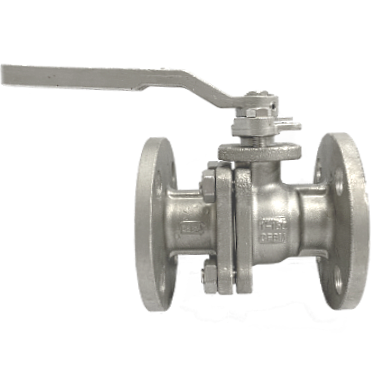 All stainless · the default
ANSI 150 SS316
FlangeANSI 150#Size1/2"–6"BodySS316DesignANSI B16.34 Ready stock→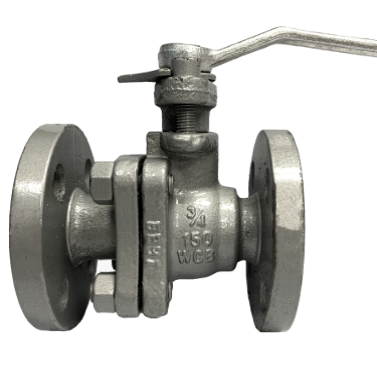 Carbon steel · 304 trim
ANSI 150 cast steel
FlangeANSI 150#Size3/4"–6"BodyA216 WCBDesignAPI 608 Ready stock→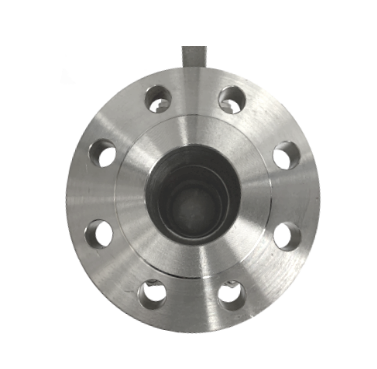 Higher class · API 6D
ANSI 300 SS316
FlangeANSI 300#Size1/2"–6"BodySS316DesignAPI 6D Ready stock→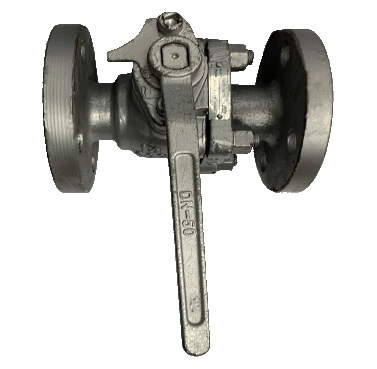 Highest shell test · 100 °C
ANSI 300 cast steel
FlangeANSI 300#Size1 1/2"–6"BodyA216 WCBDesignAPI 608 Ready stock→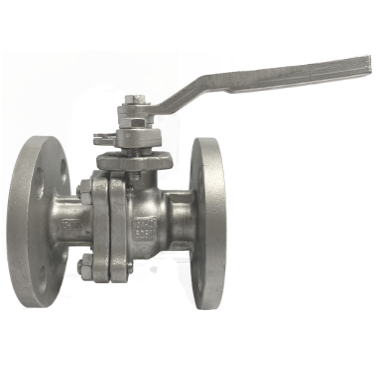 Japanese standard flange
JIS 10K SS316
FlangeJIS 10KSize1/2"–6"BodySS316DesignJIS B2071 Ready stock→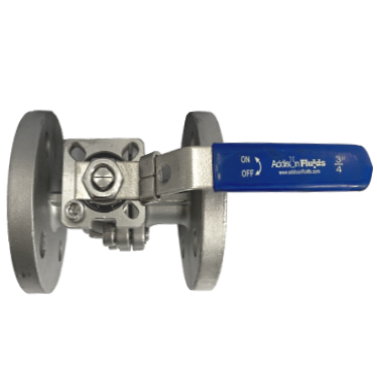 European standard flange
PN10/16 SS316
FlangePN10/16Size3/4"–6"BodySS316DesignEN 1983 Ready stock→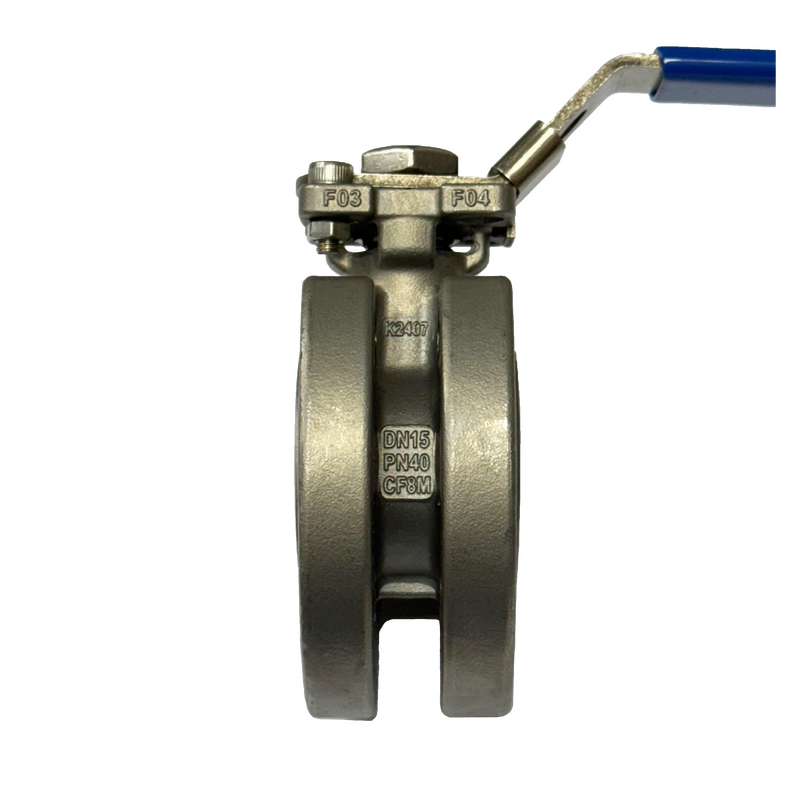 Wafer body · no flanges of its own
PN16/PN40 SS316 wafer type
FlangePN16/PN40Size1/2"–4"BodyCF8MActuatorISO 5211 Ready stock→SS316 or cast steel
Four variants are stainless throughout. Two are not stainless at all.
Of the six, four are SS316 and two are cast carbon steel. The cast‑steel pair is materially different in a way the name does not make obvious, so it is worth setting out part by part.
| Part | SS316 variants | Cast steel variants |
|---|---|---|
| Body | SS316 and CF8M | ASTM A216 WCB cast carbon steel |
| Ball | SS316 | ASTM A240 304 |
| Stem | SS316 | ASTM A182 F304 |
| Seat | PTFE | PTFE |
| Packing | PTFE | Flexible graphite |
| Gasket | PTFE | SS304 + graphite |
| Bolting | SS304 | A193 B7 / A194 2H alloy steel |
| Handle | SS201 | A216 WCB, zinc plated |
| Anti‑static device | Not listed | SS304 — fitted |
- ⚠ Cast steel means carbon steel with 304 trim. Body in A216 WCB, ball and stem in 304. It is a perfectly good valve for water, air, oil and general non‑corrosive service — and it is not a substitute for SS316 where corrosion is the reason stainless was specified.
- Graphite packing is the cast‑steel advantage. Flexible graphite packing and a graphite‑faced gasket take more heat than PTFE and behave better under thermal cycling. On hot, clean, non‑corrosive duty that is a real point in its favour.
- Only the cast‑steel variants list an anti‑static device. A ball turning on PTFE seats is electrically isolated; the SS304 anti‑static device bonds it back to the body. It matters on hydrocarbons. The SS316 parts lists here do not include one — ask us if you need it.
- The bolting is stronger on cast steel too. A193 B7 studs with A194 2H nuts are alloy‑steel pressure bolting; the SS316 variants use SS304 fasteners, which are more corrosion‑resistant but lower strength.
- PTFE seats throughout. Both families seal on PTFE, which is why every variant tops out around 150 °C regardless of what the body is made of.
Test pressures, all six
Proof tests from the factory — not working pressures.
Every variant here publishes the pressures it is tested at. These are manufacturing proof tests: the shell test proves the body casting, the seat test proves the seal against the ball, and the gas‑tightness test proves it holds low‑pressure gas. Do not design to them — they are well above the working rating, and a valve is not intended to operate there.
| Variant | Nominal | Shell / body test | Seat / tightness test | Gas tightness | Max working temperature |
|---|---|---|---|---|---|
| ANSI 150 SS316 | Class 150 | 2.4 MPa | 1.8 MPa | 0.6 MPa | −29 to 150 °C |
| ANSI 150 cast steel | Class 150 | 3.0 MPa | 2.2 MPa | 0.6 MPa | −29 to 150 °C |
| ANSI 300 SS316 | Class 300 | 6.0 MPa | 4.4 MPa | 0.6 MPa | −29 to 150 °C |
| ANSI 300 cast steel | Class 300 | 7.8 MPa | 5.6 MPa | 0.6 MPa | ⚠ 100 °C |
| JIS 10K SS316 | JIS 10K | 3.0 MPa | 2.2 MPa | 0.6 MPa | −29 to 150 °C |
| PN10/16 SS316 | 1.6 MPa | 2.4 MPa | – | 0.6 MPa | −29 to 150 °C |
- The ANSI 300 cast steel is rated to 100 °C, as the catalogue states; the other five variants state −29 °C to 150 °C. If you need Class 300 at 150 °C, use the ANSI 300 SS316, which states the full range.
- ⚠ The two Class 150 variants are tested to different pressures. Cast steel 3.0/2.2 MPa against SS316 2.4/1.8 MPa — same class, different figures, because the two families come from different catalogue sources with different test regimes. It does not mean the cast‑steel valve has a higher working rating.
- Gas tightness is 0.6 MPa on all six. The one figure that does not change with class or material — it is a low‑pressure seal check, not a strength test.
- Class 300 roughly doubles the shell test. 2.4 → 6.0 MPa in SS316, 3.0 → 7.8 MPa in cast steel. That is the measure of how much heavier a Class 300 body is.
- PN10/16 states a nominal pressure rather than a class. 1.6 MPa — that is what PN16 means — and its shell test is 2.4 MPa. It publishes no separate seat test figure.
Flange end ball valves — the specification
The range as a whole. Per‑variant figures are on the six pages.
| Size range | 1/2" to 6" (DN15 to DN150) across the range — the lower limit varies by variant, see the table |
| Flange standards | ANSI 150# · ANSI 300# · JIS 10K · PN10/16 — not interchangeable |
| Body materials | Stainless steel SS316 (and CF8M where cast) · cast carbon steel ASTM A216 WCB |
| Trim | SS316 ball and stem on the stainless variants · ASTM A240 304 / A182 F304 on the cast‑steel variants |
| Design standards | API 608 · API 6D · ANSI B16.34 · JIS B2071 · EN 1983 — by variant |
| Working temperature | −29 °C to 150 °C, except ANSI 300 cast steel at 100 °C |
| Seat | PTFE throughout — which is what sets the temperature ceiling |
| Packing | PTFE on the stainless variants · flexible graphite on cast steel |
| Shell test | 2.4 to 7.8 MPa depending on class and material — all six |
| Operation | Quarter turn manual lever |
| Not on this page | Threaded and weld‑end ball valves, 1/8" to 4" — see ball valves. Higher classes: high pressure ball valves |
| Stock | Held in Malaysia or Singapore |
Fitting a flanged valve
Most of the work is the gasket and the bolt sequence.
A flanged valve is easier to remove than a threaded one and slightly fussier to fit, because you are making two gasketed joints rather than two threads. The valve itself needs no sealant.
Before it goes in
- Check the flange standard matches. Count the bolt holes and measure the bolt circle against the mating flange. ANSI 150, JIS 10K and PN16 look similar and do not mate.
- Check the face‑to‑face against the gap. Column L on the variant pages. On a replacement, measure the valve coming out.
- Clean both faces and check the raised faces are undamaged — a scored face will weep however hard it is bolted.
- Support the pipework. A 6" Class 300 cast‑steel valve is 99 kg. It must not hang on the flanges.
Making the joints
- Use the right gasket for the standard — the gasket has to match the flange drilling and the raised face, not just the bore.
- Tighten in a crossing pattern, in stages, working up to final torque. Bolting one side down before the other cocks the joint and it will leak.
- Do not use the valve to pull misaligned pipework together. The body is not a puller, and a distorted body can bind the ball.
- Leave clearance for the lever — it needs a clear 90° sweep, and on the larger sizes the lever is long. Handle length is a column on each variant page.
- Operate it once before commissioning. A quarter turn each way confirms the ball is free and the lever has room.
Why buy flange end ball valves from us
Six valves that look alike on a price list and mostly do not fit each other.
We check the flange first
Before anything else we confirm which flange standard your pipework is. ANSI 150, JIS 10K and PN16 are all around 1.6–2 MPa and none bolts to another — it is the commonest way to order the wrong flanged valve.
We say when cast steel is wrong
Cast steel is A216 WCB with 304 trim, not stainless. It is the right valve for plenty of duties and the wrong one if corrosion is why stainless was specified. The part‑by‑part difference.
We match the standard in your spec
If the specification says API 608, API 6D, JIS B2071 or EN 1983, that names the variant. We quote against the standard rather than against the size. The stack.
We know the range
The ANSI 300 cast steel is rated 100 °C where the rest state 150, and two variants start above 1/2". We tell you these before you order, not after. All seven compared.
Full bills of materials, published
Every variant page lists every part and its material — body, ball, stem, seat, packing, gasket, bolting — with the manufacturer’s own item numbers. No email gate.
Stock in Malaysia and Singapore
Held both sides and quoted at a landed price — transport, currency, duties and taxes already inside the figure. Send a size, a standard, or a photo of the flange.
Questions we get asked
The ones that come up on the phone.
What is a flange end ball valve?
A quarter‑turn ball valve that bolts into the line through a pair of flanges instead of screwing in. A drilled ball turns inside the body: bore in line with the pipe and it is open, bore across and it is shut. Flanged bodies go to larger sizes than threaded ones, and they come out of the line without cutting or unscrewing pipework — which is why they are normal on plant where valves get removed for service.
Which flange standard do I need?
Whichever one your existing pipework is — and you have to check, not guess. We stock four: ANSI 150#, ANSI 300#, JIS 10K and PN10/16. They are not interchangeable: the bolt circles, hole counts and hole diameters differ. Count the bolt holes and measure the bolt circle on the mating flange, or send us a photo. All four compared.
Will an ANSI 150 valve bolt to a JIS 10K flange?
No. They are close in pressure — both around 1.6 to 2 MPa — which is exactly what makes this a common and expensive mistake. The bolt circles differ, so the valve will not line up. Same for PN10/16. Match the flange standard to the pipework, and treat the pressure as a separate question.
What is the difference between the cast steel and SS316 valves?
Rather more than the name suggests. The cast‑steel variants have an ASTM A216 WCB carbon steel body with a 304 ball and stem — not 316, and not stainless throughout. The SS316 variants are SS316 body, ball and stem. Cast steel does have flexible graphite packing and stronger A193 B7 bolting, which suit hot clean duty; SS316 wins on corrosion by a wide margin. Part by part.
Which variants are built to API 608 or API 6D?
API 608 is the design standard for both ANSI 150 cast steel and ANSI 300 cast steel. API 6D — the pipeline valve standard, a heavier specification — applies only to the ANSI 300 SS316. The others are ANSI B16.34, JIS B2071 and EN 1983. The full stack.
What size flange end ball valves do you stock?
1/2" to 6" (DN15 to DN150) across the range, but the lower limit varies. The SS316 ANSI 150, ANSI 300 and JIS 10K variants start at 1/2"; ANSI 150 cast steel and PN10/16 start at 3/4"; ANSI 300 cast steel starts at 1 1/2". Below that, use a threaded ball valve. The table.
What are the shell and seat test pressures?
They vary by class and material, from 2.4 MPa shell on the ANSI 150 SS316 up to 7.8 MPa on the ANSI 300 cast steel. Gas tightness is 0.6 MPa on all six. These are factory proof tests, not working pressures — do not design to them. All six sets of figures.
Why do the two Class 150 valves have different test pressures?
Because they come from different catalogue sources with different test regimes, and we publish what each one states rather than averaging them. Cast steel is tested at 3.0/2.2 MPa; SS316 at 2.4/1.8 MPa — same Class 150. It does not mean the cast‑steel valve has a higher working rating; both are Class 150. The figures.
What temperature can these run at?
−29 °C to 150 °C for five of the six — the limit is the PTFE seat, not the body. The exception is the ANSI 300 cast steel, which publishes 100 °C. If you need Class 300 at 150 °C, ask us to confirm, and consider the ANSI 300 SS316 instead.
Do you supply threaded ball valves as well?
Yes — eight threaded and weld‑end variants from 1/8" to 4", including one, two and three‑piece bodies, three‑way L‑port and T‑port, brass, and two mini ranges. Threaded suits smaller sizes and permanent installations; flanged suits larger sizes and anything you expect to remove.
How do I fit a flanged valve?
Confirm the flange standard and the face‑to‑face dimension first, clean both faces, use a gasket matched to the flange standard, and tighten the bolts in a crossing pattern in stages. Do not use the valve to pull misaligned pipework together, and support the weight — a 6" Class 300 cast‑steel valve is 99 kg. The full sequence.
Can I get these with an actuator?
The valves on this page are supplied with a manual quarter‑turn lever. If you need pneumatic or electric actuation, tell us the valve, the size and the supply available and we will come back on it — the mounting arrangement depends on the specific body.
Catalogues
One PDF per variant — direct download, no form, no email address.
 ANSI 150 SS316 flange end ball valves — 1/2" to 6", ANSI B16.34AF Hydro · PDFPDF
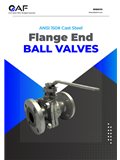 ANSI 150 cast steel flange end ball valves — 3/4" to 6", API 608AF Hydro · PDFPDF
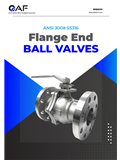 ANSI 300 SS316 flange end ball valves — 1/2" to 6", API 6DAF Hydro · PDFPDF
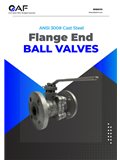 ANSI 300 cast steel flange end ball valves — 1 1/2" to 6", API 608AF Hydro · PDFPDF
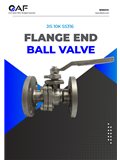 JIS 10K SS316 flange end ball valves — 1/2" to 6", JIS B2071AF Hydro · PDFPDF
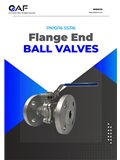 PN10/16 SS316 flange end ball valves — 3/4" to 6", EN 1983AF Hydro · PDFPDF
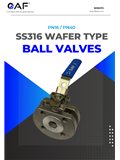 PN16/PN40 SS316 wafer type ball valves — 1/2" to 4", ISO 5211 padAF Hydro · PDFPDF
Send the flange standard, the size and the fluid
We will confirm the flange will actually bolt up, tell you whether cast steel or SS316 is right for the duty, match any standard named in your specification, and quote a landed price. Stock in Malaysia and Singapore.