
Home › Products › Accessories › Walform machine
Eaton Walterscheid · machine for saleEaton Walterscheid Walform machine — cold tube reshaping, 6 mm to 42 mm
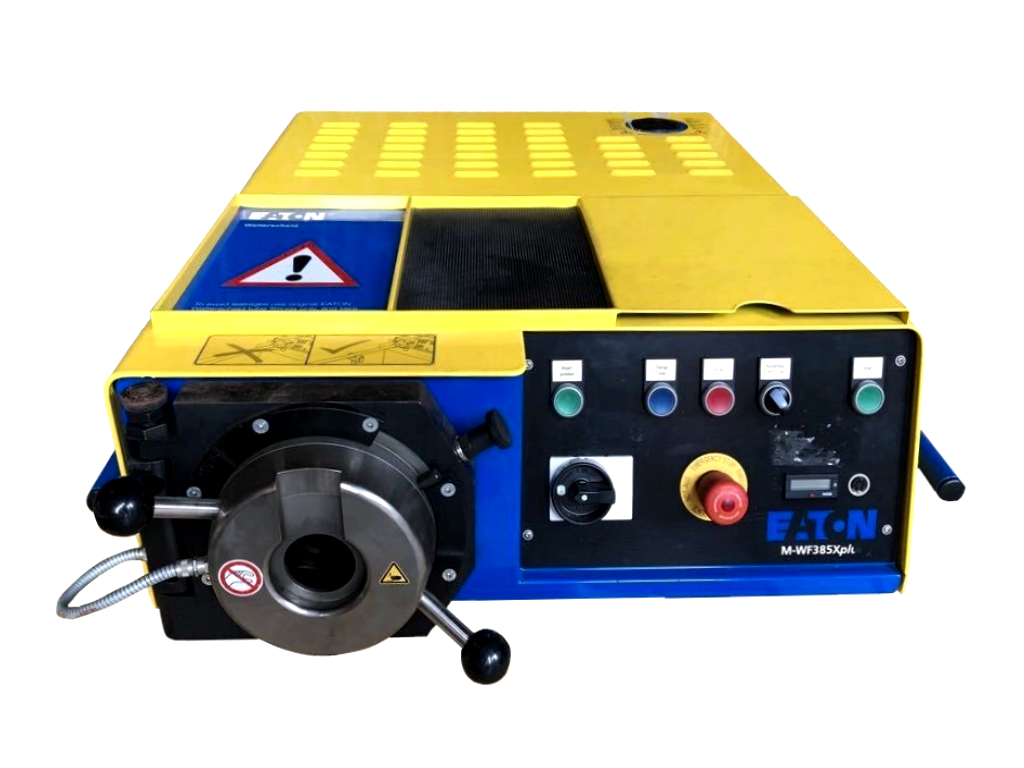
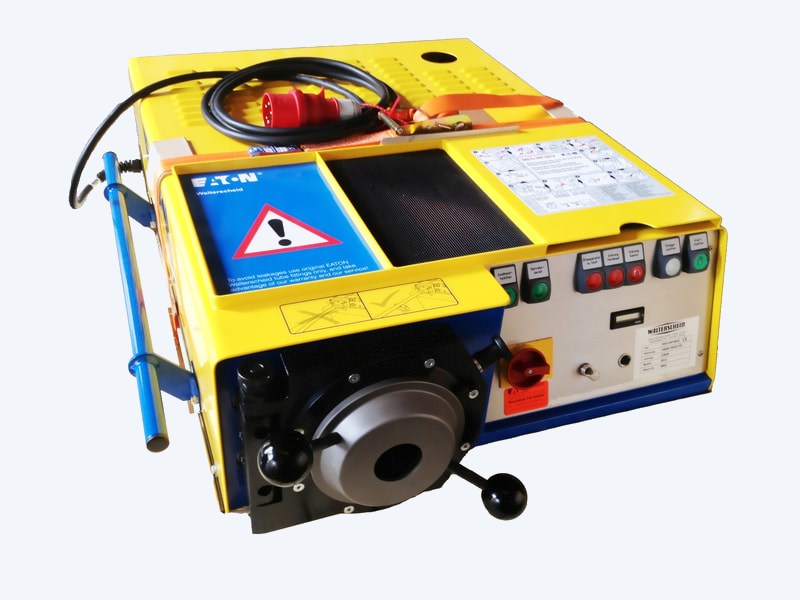
A portable electro‑hydraulic machine that cold‑forms a profile ring into the end of a hydraulic tube, so a DIN 2353 fitting can be made up with no cutting ring. One reshape takes 5 to 8 seconds against roughly a minute by hand, and the machine — not the fitter’s judgement — sets the result. Steel and stainless, 6 mm to 42 mm outside diameter.
Get a quotation within 2 working hours
Send the part number, standard, size or quantity. Stock in Malaysia or Singapore, ISO 9001:2015 certified.
What a Walform machine does, and what it replaces
It moves the critical step off the fitter’s wrist and onto a machine.
A DIN 2353 tube fitting is normally made up with a cutting ring (also called a profile ring or bite‑type ring). As the nut is tightened, two edges on the ring bite into the tube and raise a shoulder of material that the fitting then grips. It works — but the quality of the joint is decided by how far the fitter turns the nut, and that is the single most common cause of faults on a tube run: under‑tightened and it weeps, over‑tightened and the ring is ruined.
The Walform system takes that decision away. The machine cold‑forms the profile directly into the tube end before assembly, so the ring is part of the tube rather than a separate part squeezed onto it. At make‑up the fitter simply tightens a standard DIN union nut against a formed shoulder and a Viton Walform seal. There is a clear pressure point at the end of travel, so excessive or insufficient tightening is close to impossible.
What changes on the shop floor
- The cutting ring disappears — one fewer component to stock, lose or fit the wrong way round.
- The leak path closes — the formed shoulder plus a Viton seal, with metal‑to‑metal backup behind it.
- Tube pull‑out resistance rises — the profile is the tube, so there is nothing to slip.
- The joint can be broken and remade without destroying anything, which a cutting‑ring joint cannot reliably do.
- Anyone trained briefly can do it — the skill is in the machine setup, not in the wrist.
Where it stops making sense
- No power on site — the machine is electric. For field repairs, conventional cutting‑ring assembly is still the answer.
- A handful of joints — the payback is in volume and in consistency, not in a one‑off.
- Tube outside 6–42 mm, or tube that is not to the right specification — see the tube requirements below, because this is where most disappointment comes from.
We sell both. If conventional assembly is the right answer for your job we will say so — the compression fittings and ferrule fittings pages cover it.
Specification
Everything an enquiry needs, in one place.
| Type | Walform machine — Eaton Walterscheid portable tube reshaping machine for the Walform Plus fitting system |
| Function | Cold reshaping of the tube end to form a profile ring in the tube body |
| Tube outside diameter | 6 mm to 42 mm |
| Fitting standard | DIN 2353 · made in accordance with ISO 8434‑1 |
| Steel tube required | Grade suitable for cold bending and flaring to DIN 1630, type NBK‑3.1B, material ST 37.4 (E235N) |
| Stainless tube required | 1.4571, cold‑drawn seamless and scale‑free heat treated, form m to DIN 17458 |
| Tube tolerance | DIN 2391 part C. Tube to DIN 2462 part 1 will give clamping and fitting problems — this is the specification to check before you order tube |
| Tube end preparation | Sawn square, deburred inside and out to a maximum 0.2 mm, paint removed from the clamping and reshaping area, bare metal clean and free of spalling |
| Cycle time | 5 to 8 seconds per tube end — against roughly 60 seconds for conventional manual assembly |
| Joint components | Four: reshaped tube end · DIN fitting body · DIN union nut · Viton Walform seal |
| Tooling per size | Clamping jaw and reshaper — they form a single unit for each tube size and are ordered together |
| Tooling material | Stainless SS316 or carbon steel ST37.4 / ST52.4, matched to the tube being formed |
| Reshaper designs | Three: with adapter ring · with internal support · without internal support — chosen on tube material and wall thickness |
| Operators | One per machine |
| Supplied by | RFS Hydraulics — machine, tooling, seals and fittings from one order |
The tube specification is the part people skip, and it is the part that causes trouble. Tube to the wrong tolerance standard will clamp badly and form badly no matter how the machine is set. Send us the tube you intend to use and we will check it before you buy tooling.
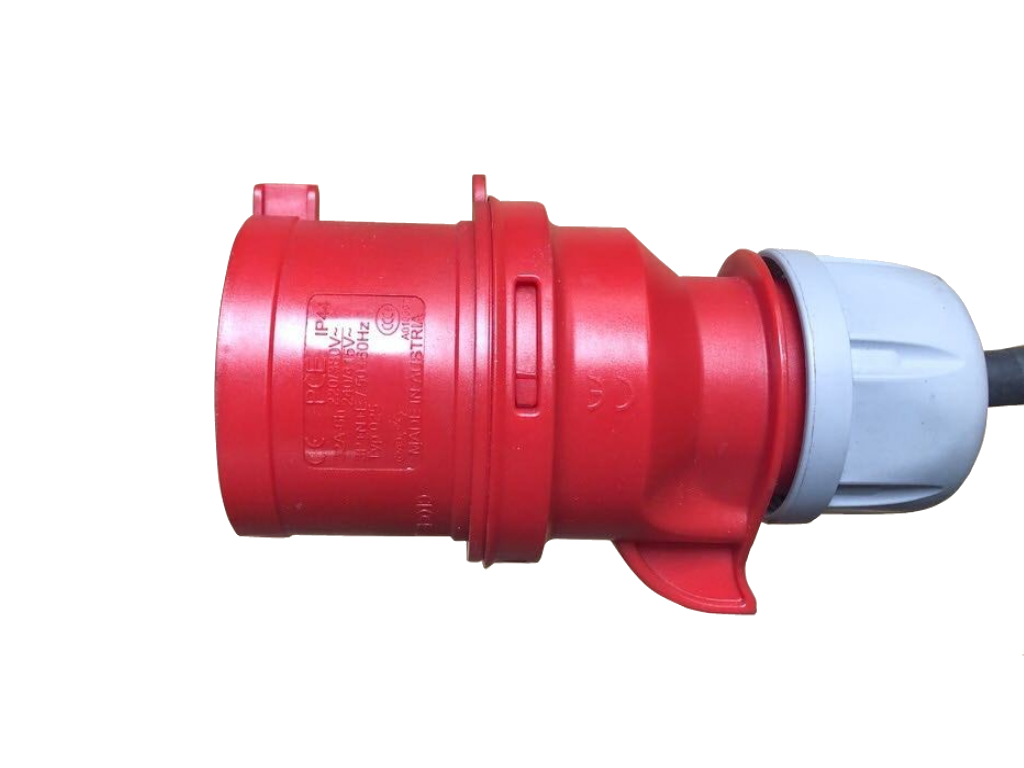
What the machine and the formed end look like.
Buying a Walform machine in Malaysia and Singapore
A machine is a capital purchase, so here is how the order actually runs.
Stock, delivery and ordering
- The machine is brought in to order — it is not a shelf item. Tell us early and we will give you a firm lead time with the quote.
- Tooling is the long pole — jaws and reshapers are per size, so the size list decides the lead time more than the machine does.
- Walform seals and DIN fittings are held in Johor Bahru and Singapore, so consumables are not the constraint.
- One price, delivered — transport, currency, duties and taxes are inside the figure we quote.
How a machine enquiry runs
- Send the tube sizes and wall thicknesses you build with, and the material.
- We come back with the machine, the tooling list per size and the reshaper design for each.
- We confirm your tube specification against DIN 2391 part C before anything is ordered.
- On delivery we walk your fitters through setup, tool change and the first commissioning.
The four parts of a Walform joint
Count them against a cutting‑ring joint and one part is missing on purpose.
| Part | What it is | What it does |
|---|---|---|
| 1. Reshaped tube end | The tube itself, cold‑formed by the machine | Carries the profile ring formed into the tube body. This is what replaces the cutting ring — there is nothing separate to slip or crush. |
| 2. DIN fitting body | Standard DIN 2353 body | The counter‑face the formed shoulder seats against. Ordinary catalogue part, no special version needed. |
| 3. DIN union nut | Standard DIN 2353 nut | Pulls the formed shoulder onto the body. Slides onto the tube before reshaping — forget it and the tube has to be re‑cut. |
| 4. Viton Walform seal | Elastomer ring, FPM (Viton®) | Seals the only remaining leak path, with a metal‑to‑metal backup behind it for redundancy. |
- Slide the nut on first. The nut cannot pass a formed tube end. It is the mistake every new operator makes once.
- The seal is a consumable. Keep Walform seals on the shelf — they are the cheapest part of the joint and the one that gets lost.
- Two seals in the joint, by design. The elastomer does the sealing; the metal contact behind it is what stops a failed elastomer becoming a failed joint.
Tooling: clamping jaw, reshaper, remover
The machine is one purchase. The tooling is the one you have to get right.
Clamping jaw
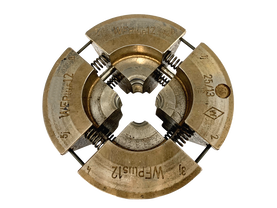
Holds the tube while the reshaper works. Sized to the tube outside diameter, and supplied in SS316 or ST37.4 / ST52.4 to match the tube. Pushes into the tool holder with slight pressure up to a noticeable catch.
Reshaper
The forming stud. Comes in three designs — with adapter ring, with internal support, and without internal support. Which one you need is decided by the tube material and wall thickness, not by the diameter alone.
Removing tool
Screws the reshaper anticlockwise out of the holder. The clamping jaw is forced out by slight pressure and tilting at the same time. Keep it with the machine — a tool change without it is a struggle.
They come as a pair
For any given size the reshaper and clamping jaw form a single unit. Order them together, store them together, and change them together — mixing sizes across a tool change is how tubes get scrapped.
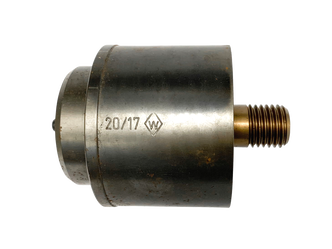
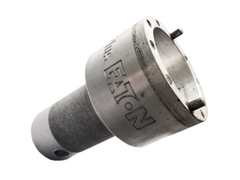
Eaton publishes a suitability chart pairing every tube outside diameter and wall thickness with the correct reshaper design, separately for steel ST37.4 / ST52.4 and stainless 1.4571. We would rather read it for you than have you read a copy of it: send the OD, the wall thickness and the material and we will name the reshaper on the quote.
Setting it up and running it
First commissioning, then the cycle your fitters will repeat all day.
First commissioning
- Replace the oil reservoir vent screw supplied in the consignment before the machine is run for the first time.
- Open the tool holder — remove the unlocking pin, turn both handles anticlockwise, pull them and move aside. Mind your fingers: there is a clamping risk here.
- Fit the tooling — clamping jaw in with slight pressure to a noticeable catch, then the reshaping stud hand‑tight using the removing tool.
- Close and relock — swing the holder back, slide it into its mount, pull the unlocking pin, turn both handles clockwise until the pin engages again.
- Power up — master switch to I; the machine‑ready indicator lights.
The reshaping cycle
| Step | What you do | What tells you it worked |
|---|---|---|
| 1 | Insert tools, close the tool holder | The red fault lamp goes out |
| 2 | Press the start key | Machine moves to its basic position. Repeat this after every tool change |
| 3 | Press start and function together, hold about 2 seconds | The white ready lamp lights and the clamping jaws move to the insertion position |
| 4 | Slide the nut onto the tube, insert the tube horizontally to the stop and hold it firmly | Tube axis and tool axis are in line |
| 5 | Press start | The cycle runs automatically and cannot be interrupted. Keep the tube firmly held |
| 6 | Pull the reshaped tube out and inspect it | No surface damage, spalling or cracks — and check the control diameter |
- An undersized reshaping diameter impairs the fitting. That is what the control diameter check is for — do not treat it as optional.
- Switch the machine off before a tool change, then start again from the beginning.
Where a Walform machine earns its place
Volume tube work, where consistency is worth more than the machine costs.
Markets
- Stationary and industrial equipment
- Construction
- Agriculture
- General hydraulics
Typical applications
- Machine tools and hydraulic presses
- Excavators and loaders
- Harvesters and balers
- Mining equipment
- Concrete pumps
- Offshore equipment
The arithmetic is simple enough to do on the back of the quote: at 5 to 8 seconds against 60, every tube end saves the best part of a minute, and one operator runs the machine. If you are making tube assemblies in any quantity, the saving is in labour hours and in tubes you do not scrap.
Why buy a Walform machine from RFS Hydraulics
Five things that decide whether the machine earns its keep.
We check your tube first
The commonest cause of trouble is tube to the wrong tolerance standard. We check what you buy against DIN 2391 part C before you commit to tooling, because no machine setting fixes bad tube.
Tooling named on the quote
We work out the reshaper design per size from your OD, wall thickness and material, so the quote lists exactly what you need rather than leaving you to read a chart.
The whole system from one order
Machine, jaws, reshapers, Viton Walform seals, Walform tube and DIN 2353 fittings. One supplier, one delivery, one person to call.
Commissioning with your fitters
We go through first start‑up, tool change and the control diameter check on site. The machine only pays back if the people using it trust it.
Consumables held locally
Seals and fittings in Johor Bahru and Singapore, so a missing seal never stops a build.
One price, delivered
Transport, currency, duties and taxes are already in the figure. Nothing is added at the end.
Frequently asked questions
Eighteen, from whether you need the machine at all through to what the operator checks on every tube.
Do I need a Walform machine, or will conventional fittings do?
Conventional cutting‑ring assembly is perfectly sound and is the right answer for low volume, repair work, and anywhere without power. The machine earns its place when you are making tube assemblies in quantity and the cost of an occasional bad joint — a leak, a stripped ring, a scrapped tube — matters. It buys consistency, not capability: both methods make a DIN 2353 joint.
What tube can I use?
Steel to a grade suitable for cold bending and flaring per DIN 1630, type NBK‑3.1B, material ST 37.4 (E235N); stainless 1.4571, cold‑drawn seamless and scale‑free heat treated to form m of DIN 17458. In both cases the tolerance must be to DIN 2391 part C. Tube supplied to DIN 2462 part 1 will give clamping and fitting problems — that one line has caused more failed trials than any machine setting.
How do I prepare the tube end?
Saw it square to the length you need. Deburr inside and out to a maximum of 0.2 mm. Remove any paint from the clamping and reshaping area, and make sure the bare metal is clean with no spalling and no damage. Then reshape immediately — a clean end that sits around picking up dirt is not a clean end.
Which reshaper do I need?
There are three designs — with adapter ring, with internal support, and without internal support — and the choice depends on the tube material and wall thickness, not the diameter on its own. Eaton publishes a suitability chart covering every OD and wall from 6 to 42 mm, with separate tables for steel and for stainless. Send us OD, wall thickness and material and we will name the reshaper.
Can I use one clamping jaw with a different reshaper?
No. For each size the reshaper and clamping jaw form a single unit. They are ordered together and changed together. Mixing them across sizes is how tubes get scrapped and tooling gets damaged.
How long does one tube end take?
5 to 8 seconds, against roughly 60 seconds for a conventional manual assembly. That is the headline number, but the one worth planning around is that one operator runs one machine — the labour saving is per tube end, all day.
Do I still need the nut and the fitting body?
Yes — and they are standard DIN 2353 parts, not special versions. What you no longer need is the cutting ring. The joint is the reshaped tube end, the DIN body, the DIN union nut and a Viton Walform seal. And slide the nut onto the tube before you reshape it: it will not pass a formed end afterwards.
Can a Walform joint be taken apart and remade?
Yes, and this is one of the real advantages. Because the profile is formed into the tube rather than pressed into a separate ring, the joint can be broken and remade without destroying a component. A cutting‑ring joint cannot reliably do that — over‑tightening damages the ring and the ring is not reusable.
What checks does the operator make on the finished tube?
Look for surface damage, spalling and cracks, then check the control diameter. An excessively small reshaping diameter impairs the function of the fitting, and it is not always obvious by eye — which is precisely why the check exists. It takes a moment and it is the difference between a controlled process and a hopeful one.
Can it be run on site?
It is a portable machine and it is built to be moved between job sites, but it is electrically driven — so it needs a power supply. For work where there is no power, conventional cutting‑ring assembly remains the practical method, and we supply those fittings too.
What do the indicator lamps mean?
The red fault lamp is on while the tool holder is open or the machine is not ready; it goes out once the tools are in and the holder is closed. The white ready lamp comes on after you hold start and function together for about two seconds, and that is also when the clamping jaws move to the insertion position. There is a separate machine‑ready indicator that lights when the master switch goes to I. If the red lamp will not clear, the holder is not properly locked — check the unlocking pin has engaged.
Why do I have to press start again after every tool change?
Because it returns the machine to its basic position. After any tool change the machine does not know where the jaws are, and the reference has to be re‑established before a cycle will run correctly. It is one keypress and it is not optional — the procedure explicitly repeats it after every tool change.
Can I stop a cycle once it has started?
No. Once you press start the cycle runs automatically and cannot be interrupted — not by releasing the button, and not by external means. That is why the tube has to be firmly held and fully inserted to the stop before you press it. If a tube is wrong, let the cycle finish and scrap the end; do not try to intervene mid‑stroke.
What should the operator check on every formed end?
Two things, every time. First look for surface damage, spalling and cracks on the formed area. Then check the control diameter with a gauge. An excessively small reshaping diameter impairs the function of the fitting and it will not always be obvious by eye — a tube that looks fine and measures wrong is exactly the one that leaks in service.
What is the reshaping pressure set to?
The procedure runs with the Walform pressure set at 99%. Operators should not be adjusting it to compensate for a tube that will not form — if the end is not coming out right, the cause is almost always the tube specification, the wall thickness, or the wrong reshaper, not the pressure setting. Tell us what you are seeing and we will work back from the tube.
What are the safety points on the machine?
Three worth briefing every new operator on. Opening the tool holder carries a clamping risk — the handles turn anticlockwise and the holder swings aside, so keep fingers clear. The cycle cannot be interrupted, so hands must be clear and the tube held before start is pressed. And switch the machine off before changing tools, then begin the start‑up sequence again from the beginning.
What does the machine need before its first run?
Before commissioning, replace the oil reservoir screw with the vent screw supplied in the consignment. Then the tool holder is opened, the clamping jaw pushed in to a noticeable catch and the reshaping stud fitted hand‑tight with the removing tool, the holder closed and relocked until the unlocking pin engages, and the master switch set to I. For anything beyond that, work to Eaton’s own manual rather than a summary — ask us and we will get it to you.
One size forms fine and another will not. What is different?
Almost always the reshaper design. The three designs — with adapter ring, with internal support, without internal support — are chosen on wall thickness and material, not diameter, so two tubes of the same OD can need different tooling if their walls differ. A thin wall without internal support will collapse rather than form. Send the OD, the wall and the material for the size that is failing.
Catalogue
Direct PDF download — no form, no email address.
Related: Walform tube for the tube itself · compression fittings and ferrule fittings for conventional DIN 2353 assembly · hydraulic steel tube.
Send the tube sizes, the wall thicknesses and the material.
We will come back with the machine, the tooling list per size and the reshaper design for each — and check your tube specification before you commit.