
Home › Products › Pipes and tubes › Walform tube
Eaton Walterscheid · formed to orderWalform tube to DIN EN ISO 8434‑1, 6 mm to 42 mm
A compression‑joint connection where the profile ring is cold formed into the tube itself on a Walform machine — no separate cutting ring. Rated to 800 bar in the S series and 500 bar in the L series, in carbon or stainless steel, mated with DIN 2353 metric fittings.
Get a quotation within 2 working hours
Send the part number, standard, size or quantity. Stock in Malaysia or Singapore, ISO 9001:2015 certified.
What Walform tube actually is
Not a tube off the rack — a tube end that has been formed.
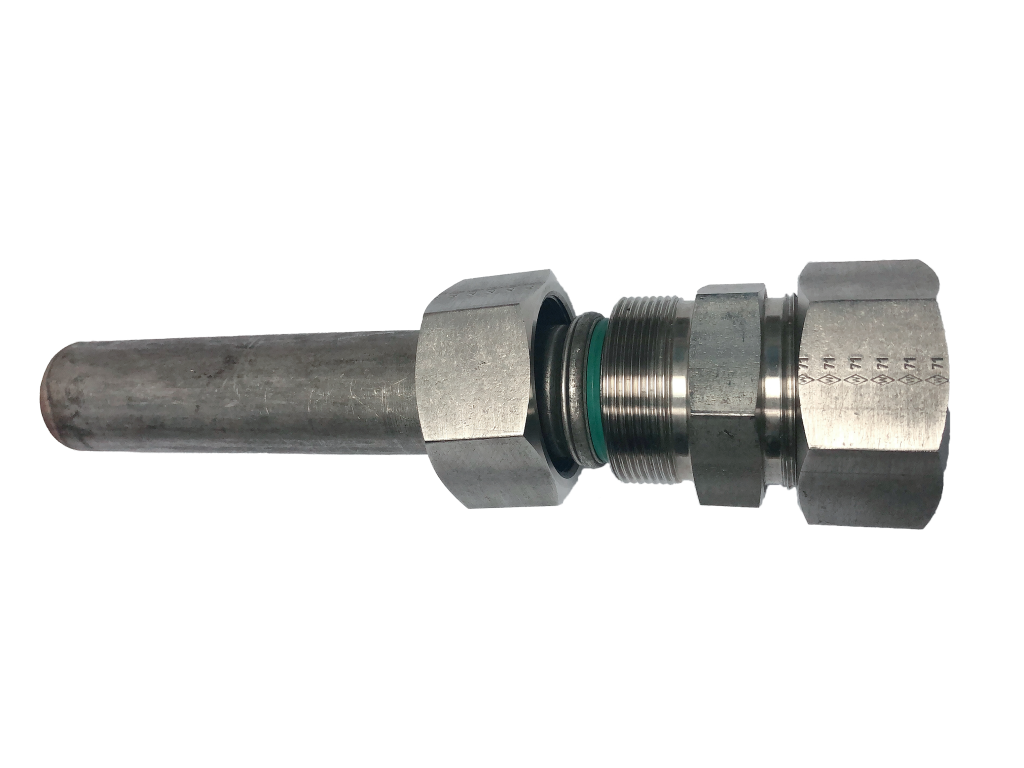
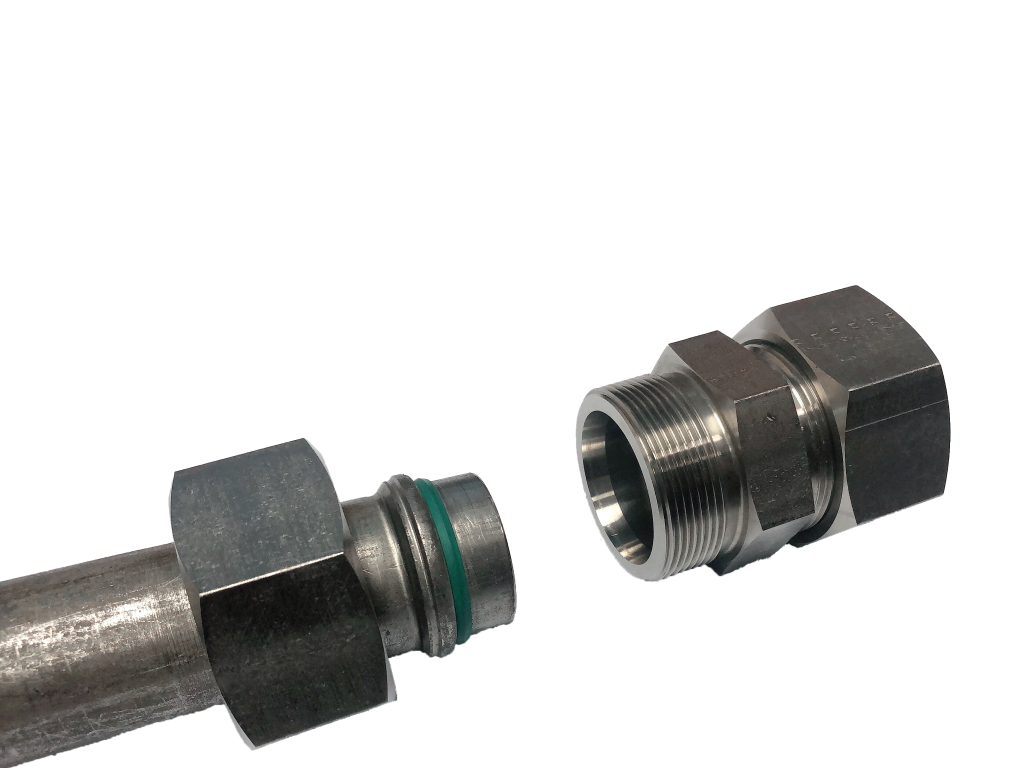
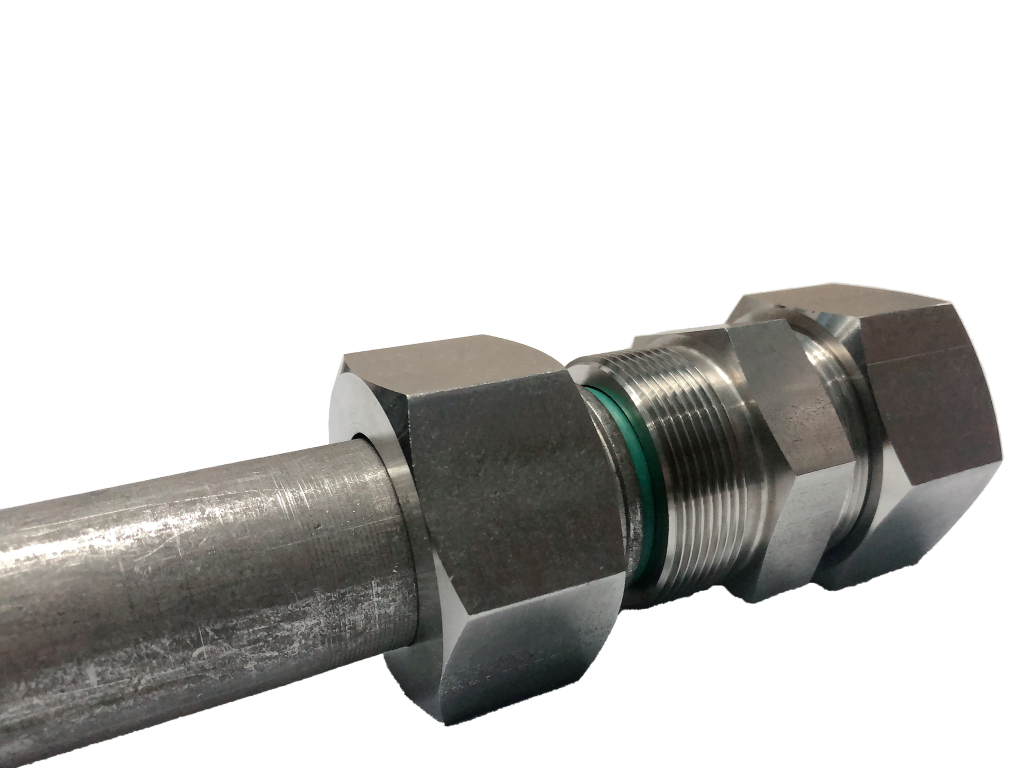
Walform is part of the Eaton Walterscheid tube fitting series, used to seal metal‑to‑metal and elastomeric surfaces. It belongs to the family usually called compression‑joint or bite‑type fittings, where a profile ring grips the tube body to make the connection. The difference with Walform is where that ring comes from: it is cold formed into the tube itself by a Walform machine, rather than being a separate cutting ring squeezed onto the outside.
A Viton seal sits on the formed profile ring before the union nut is tightened, and that seal is what blocks leakage. Walform tube is made to DIN EN ISO 8434‑1 in carbon steel and stainless steel, from 6 mm to 42 mm outer diameter, and connects to the DIN 2353 range of metric tube fittings. It is known for good resistance to corrosion and pressure, high strength and ease of installation.
The material is ordinary tube — it is the end that is special. Walform starts from hydraulic steel tube in NBK / ST37.4 to DIN 2391, or from stainless steel tube in 1.4571 or SS316, cold drawn seamless and scale‑free heat treated. So the material certificate for a Walform assembly is the certificate for the parent tube — there is a real EN 10204 3.1 reproduced on each of those two pages.
Why form the tube instead of biting it
Six advantages, and most of them are about what can go wrong on site.
Lower skill needed
The assembly process is simple and practical and needs less technical skill than a cutting‑ring joint made up by feel. The machine does the critical part, not the fitter.
Fewer parts to leak
A small number of components reduces the risk of leaking — there is no separate ring to omit, damage or install backwards.
Holds under dynamic load
Reliable tube retention that keeps working under high dynamic loads. The profile ring is part of the tube, so it cannot migrate along it.
Consistent every time
Consistent performance and quality control across every connection, so the joints on a machine are alike rather than as good as whoever made each one.
Safer workplace
Risk from improper assembly is reduced dramatically. On a high‑pressure circuit that is a safety argument, not just a reliability one.
Cheaper to maintain
Fewer replacement components for maintenance work, and re‑assembly is straightforward — the seal is the consumable, not the joint.
Part numbers, threads and pressure ratings
Nineteen sizes across two series, with the matching Viton seal for each.
Two series, and the difference is wall thickness and therefore pressure. The L series is lighter duty — 500 bar falling to 250 bar as diameter grows. The S series is heavy duty, reaching 800 bar at 6–10 mm. Pressure always falls as diameter rises, so read the band heading rather than just the size.
Unit weight is kg per 100 pieces. The last two columns are the Viton seal for that size — order it with the tube, not after it.
L series · 500 BAR (7,252 psi)
| Tube OD | Type | Reference | Unit weight (kg/100) | Thread | Seal type | Seal reference |
|---|---|---|---|---|---|---|
| 6 mm | M6L | WAL 039842 | 0.9 | M12 x 1.5 | WF-WD 6L/S VI | WAL 610871 |
| 8 mm | M8L | WAL 039843 | 1.4 | M14 x 1.5 | WF-WD 8L/S VI | WAL 610872 |
| 10 mm | M10L | WAL 039844 | 2.0 | M16 x 1.5 | WF-WD 10L/S VI | WAL 610873 |
L series · 400 BAR (5,801 psi)
| Tube OD | Type | Reference | Unit weight (kg/100) | Thread | Seal type | Seal reference |
|---|---|---|---|---|---|---|
| 12 mm | M12L | WAL 039845 | 2.5 | M18 x 1.5 | WF-WD 12L/S VI | WAL 610874 |
| 15 mm | M15L | WAL 039846 | 4.0 | M22 x 1.5 | WF-WD 15L/S VI | WAL 610875 |
| 18 mm | M18L | WAL 039847 | 6.0 | M26 x 1.5 | WF-WD 18L/S VI | WAL 610877 |
L series · 250 BAR (3,626 psi)
| Tube OD | Type | Reference | Unit weight (kg/100) | Thread | Seal type | Seal reference |
|---|---|---|---|---|---|---|
| 22 mm | M22L | WAL 039848 | 8.0 | M30 x 2 | WF-WD 22L/S VI | WAL 610879 |
| 28 mm | M28L | WAL 039849 | 8.5 | M36 x 2 | WF-WD 28L/S VI | WAL 610881 |
| 35 mm | M35L | WAL 039850 | 13.0 | M45 x 2 | WF-WD 35L/S VI | WAL 610883 |
| 42 mm | M42L | WAL 039851 | 21.0 | M52 x 2 | WF-WD 42L/S VI | WAL 610885 |
S series · 800 BAR (11,603 psi)
| Tube OD | Type | Reference | Unit weight (kg/100) | Thread | Seal type | Seal reference |
|---|---|---|---|---|---|---|
| 6 mm | M6S | WAL 039652 | 1.5 | M14 x 1.5 | WF-WD 6L/S VI | WAL 610871 |
| 8 mm | M8S | WAL 039653 | 1.7 | M16 x 1.5 | WF-WD 8L/S VI | WAL 610872 |
| 10 mm | M10S | WAL 039654 | 3.0 | M18 x 1.5 | WF-WD 10L/S VI | WAL 610873 |
S series · 630 BAR (9,137 psi)
| Tube OD | Type | Reference | Unit weight (kg/100) | Thread | Seal type | Seal reference |
|---|---|---|---|---|---|---|
| 12 mm | M12S | WAL 039855 | 3.5 | M20 x 1.5 | WF-WD 12L/S VI | WAL 610874 |
| 16 mm | M16S | WAL 039857 | 6.0 | M24 x 1.5 | WF-WD 16S VI | WAL 610876 |
S series · 420 BAR (6,091 psi)
| Tube OD | Type | Reference | Unit weight (kg/100) | Thread | Seal type | Seal reference |
|---|---|---|---|---|---|---|
| 20 mm | M20S | WAL 039858 | 9.5 | M30 x 2 | WF-WD 20S VI | WAL 610878 |
| 25 mm | M25S | WAL 039859 | 19.5 | M36 x 2 | WF-WD 25S VI | WAL 610880 |
| 30 mm | M30S | WAL 039860 | 21.5 | M42 x 2 | WF-WD 30S VI | WAL 610882 |
| 38 mm | M38S | WAL 039861 | 31.0 | M52 x 2 | WF-WD 38S VI | WAL 610884 |
One seal reference often covers both the L and the S tube at the same diameter — WF‑WD 6L/S VI serves both the 6 mm L and the 6 mm S. The thread does not: 6 mm L takes M12 × 1.5 and 6 mm S takes M14 × 1.5. Confusing those two is the most common ordering error on this product, so state the series as well as the diameter.
Buying Walform tube in Malaysia and Singapore
Formed to order, not picked off a rack — so this is what actually sets the lead time.
Stock, delivery and ordering
- Where the stock is — the office is in Kuala Lumpur, and the parent tube is held in two warehouses: Johor Bahru and Singapore. Addresses and direct lines are on the contact page.
- Forming happens after you order — the tube is cut, prepared and formed on the machine to your series and thread, so a Walform assembly is made for the job rather than taken off a shelf.
- Lead time — follows size and quantity, and we confirm it with the quote, within two working hours, rather than leave you to guess.
- Delivery cost — already inside the product price, along with transport, currency conversion, duties and taxes. Nothing is added afterwards.
Because the assembly is formed rather than picked, there is no shelf figure to quote — which is why the lead time comes back on the quote itself. Payment terms and claim periods are in the FAQ.
How a Walform enquiry runs
Four things and we can price it without going back and forth:
- Tube OD and wall — in millimetres. The forming tool is matched to the OD.
- Series — L or S. It sets the thread and the pressure rating.
- The fitting it lands on — the DIN 2353 thread, or the part number if you have it.
- Quantity and lengths — total metres, and whether you want them cut to length.
A product specialist prices it within two working hours. We also hold the hydraulic steel tube the Walform is formed from and the DIN 2353 fittings it lands on, so one order covers the run.
Preparing the tube
Four steps before the machine, and most Walform faults trace back to them.
Grade first, then four steps
Use a grade suitable for cold bending and flaring. In carbon steel that is type NBK, material ST37.4, to DIN 2391. In stainless it is grade 1.4571 or SS316, and it must be cold drawn seamless and scale‑free heat treated.
- 1. Saw off square. Use a saw — not a tube cutter or a cutting‑off wheel. A rolled or burnt end will not form correctly.
- 2. Deburr inside and out, and remove paint from the clamping and reshaping area.
- 3. Clean back to bare metal at the tube end. Check for damage and spalling.
- 4. Run the three checks opposite before you start.
The three checks that prevent most faults
- The tube OD marked on the clamping jaw and the reshaper matches the tube you are about to form.
- The clamping surface is oil free, so the tube cannot slip.
- The clamping surface is chip free, so the tube clamps correctly.
Three checks, and between them they account for most Walform faults. All are quicker than remaking a joint on a machine that is already assembled.
Need the parent tube too? Hydraulic steel tubes for ST37.4 NBK, stainless steel tubes for SS316.
Forming it on the machine
Eight steps, and one number to write down at the end.
Walform tube is made to order — customised to the outer diameter, wall thickness and length the job needs. That is why it is not a rack item: the forming happens after you tell us the size.
Setting the machine up
- 1. Check the tube OD and thickness, and confirm the complete tooling — reshaper and clamping jaw — is present for that size.
- 2. Switch the machine on and press change tool.
- 3. Open the tool holder, place the clamping jaw in, tighten the reshaper screw, close the holder.
- 4. Press start and function together for two seconds and wait for the white indicator. The jaws move to the insertion position, which means the tool is ready.
Forming the tube
- 5. Put the nut on the tube first — it cannot go on afterwards — then slide the tube in until the clamping jaws hold it firm.
- 6. Insert the tube horizontally up to the stop, hold it tight and press start. Reshaping begins.
- 7. Pull the formed tube out and check it for defects.
- 8. Note down the control diameter. A reshaping diameter that has come out small can damage the fitting function — this is the measurement that tells you whether the joint will seal, before it is on the machine.
We stock the Walform machine itself, and can form tube for you if you would rather not own one.
The Walform seal
A fluorocarbon seal doing the work between two steel faces.
The seal and the tube are ordered as a set. The seal is compressed between two metal surfaces, and it is what makes a steel‑to‑steel joint leak free.
Re‑assembly is easy
Friendly assembly — straightforward to take apart and put back together, or to swap the seal. Breaking the joint does not consume the formed profile ring.
Takes impulse and vibration
The fluorocarbon material is designed to withstand dynamic pressure impulse and vibration loads — the conditions that finish off a lesser seal on a working machine.
Leak‑free steel to steel
Reliable sealing between steel faces, so no liquid, oil or water escapes while the system is under running pressure.
Seal references are in the part number tables above, alongside the tube they belong to. For threaded port sealing see bonded seals and Dowty seals.
Why buy Walform tube from RFS Hydraulics
Six things that decide whether a Walform order goes smoothly.
We hold the parent tube
Walform starts from ordinary tube, and we stock both feedstocks — hydraulic steel tube in ST37.4 NBK and stainless tube in SS316 — in Johor Bahru and Singapore. No waiting on tube before the forming can start.
We have the machine
We stock the Walform machine and the tooling — see accessories — and can form tube for you if owning one is not worth it for your volume.
Tube, nut and seal as a set
The Viton seal reference for every size is published on this page, so the set arrives complete rather than one part short.
3.1 certificate on the material
Because Walform is a formed end on standard tube, the parent tube carries an EN 10204 3.1 mill certificate as standard — real examples on the stainless and hydraulic tube pages.
DIN 2353 fittings too
Walform mates to DIN 2353 metric tube fittings, and we stock those as compression fittings — plus the pipe clamps to support the run.
Technical help before you order
Send the tube OD, the wall and the series, or just the working pressure and we will pick. More about RFS Hydraulics.
Delivery within Malaysia is already inside the price. Because Walform is formed to order, lead time depends on the size and quantity — ask when you enquire. See the FAQ or the terms and conditions.
Frequently asked questions
Eleven, from what it is through forming and sealing to ordering.
What is Walform tube?
A compression‑joint tube connection from the Eaton Walterscheid fitting series. The profile ring is cold formed into the tube itself on a Walform machine, rather than being a separate cutting ring pressed onto the outside. A Viton seal sits on that formed ring and blocks leakage when the union nut is tightened. Made to DIN EN ISO 8434‑1 from 6 mm to 42 mm OD.
What material is Walform tube made from?
Ordinary tube — it is the end that is special. In carbon steel, type NBK material ST37.4 to DIN 2391; in stainless, grade 1.4571 or SS316, cold drawn seamless and scale‑free heat treated. The grade has to be suitable for cold bending and flaring. That also means the material certificate for a Walform assembly is the parent tube’s EN 10204 3.1.
What pressure will Walform tube take?
Up to 800 bar (11,603 psi) on 6–10 mm in the S series, and 500 bar (7,252 psi) on 6–10 mm in the L series. Rating falls as diameter rises — 42 mm L is 250 bar. Every size and its band is tabulated on this page.
What is the difference between the L and S series?
Wall thickness, and therefore pressure. S is the heavy‑duty series. At the same tube diameter the thread also differs — 6 mm L takes M12 × 1.5 while 6 mm S takes M14 × 1.5 — so always state the series as well as the diameter when ordering.
What fittings does Walform tube connect to?
DIN 2353 metric tube fittings, which we stock as compression fittings. The union nut goes onto the tube before forming — it cannot be fitted afterwards.
Why choose Walform over a cutting ring fitting?
Fewer things can go wrong. Simpler assembly needing less skill, fewer components so less to leak, reliable retention under high dynamic loads, and consistent quality across every joint because the machine forms the ring rather than the fitter. That also reduces risk from improper assembly and cuts the number of replacement parts needed for maintenance.
How is Walform tube produced?
Formed to order from the tube OD, wall thickness and length you need. In outline: saw the end square (never a cutter or cutting‑off wheel), deburr and clean to bare metal, confirm the tooling matches the OD, then form on the machine with the nut already on the tube. Afterwards, record the control diameter — a reshaping diameter that has come out small can damage the fitting function. Full eight‑step sequence is on this page.
Is Walform tube available in stainless steel?
Yes. Stainless Walform is formed from grade 1.4571 or SS316 tube, which must be cold drawn seamless and scale‑free heat treated — scale on the surface will not form cleanly. In carbon steel the equivalent is type NBK, material ST37.4, to DIN 2391. Both are stocked as parent tube: see stainless steel tubes and hydraulic steel tubes.
Do I need a Walform machine to use Walform tube?
To form it, yes — the profile ring is made by the machine, not by hand. But you do not have to own one. We stock the Walform machine and the tooling, and we can form tube for you if your volume does not justify buying a machine. If you do own one, note that the tooling is size specific: each tube OD needs its own matching clamping jaw and reshaper.
Can a Walform joint be taken apart and re-used?
Yes, and that is one of its advantages. The profile ring is part of the tube wall, so breaking the joint does not consume it the way removing a cutting ring can. Re‑assembly is straightforward — the Viton seal is the consumable, not the joint. Keep spare seals for the sizes you run; the reference for each size is in the part number tables.
What is a Viton seal, and why that material?
Viton is a fluorocarbon elastomer, and it is specified here because of what a hydraulic joint does to a seal. It withstands dynamic pressure impulse and vibration loads — the rapid pressure spikes and constant shake that destroy a lesser elastomer — while being compressed between two steel faces. It also resists the oils and temperatures found in hydraulic service. The seal, not the metal contact, is what makes the joint leak free.
Catalogue
Full part number and dimension tables. Direct PDF download — no form, no email address.
Part numbers and dimensions are in the catalogue; stock and price are not, so send us the list and we will confirm both.
Related: Walform machine · hydraulic steel tubes · stainless steel tubes · compression fittings · bonded seals · about Eaton
Send the tube OD, the wall and the series.
Or just the working pressure — a product specialist will pick the series and quote within two working hours.