
Home › Products › Pipes and tubes › Copper pipes
AF Hydro · ready stockCopper pipes to JIS H3300 C1220T & ASTM B88, 6 mm to 54 mm
6 mm to 54 mm, or 1/8"NB to 4"NB, in phosphorus deoxidised copper — over 99.9% pure. Two standards for two jobs: JIS H3300 C1220T for water, ASTM B88 in Type K, L and M wall thicknesses for HVAC and refrigeration. Full wall thickness table below.
Get a quotation within 2 working hours
Send the part number, standard, size or quantity. Stock in Malaysia or Singapore, ISO 9001:2015 certified.
What copper pipe is, and when you need it
Straight lengths, and the wall type is the pressure decision.
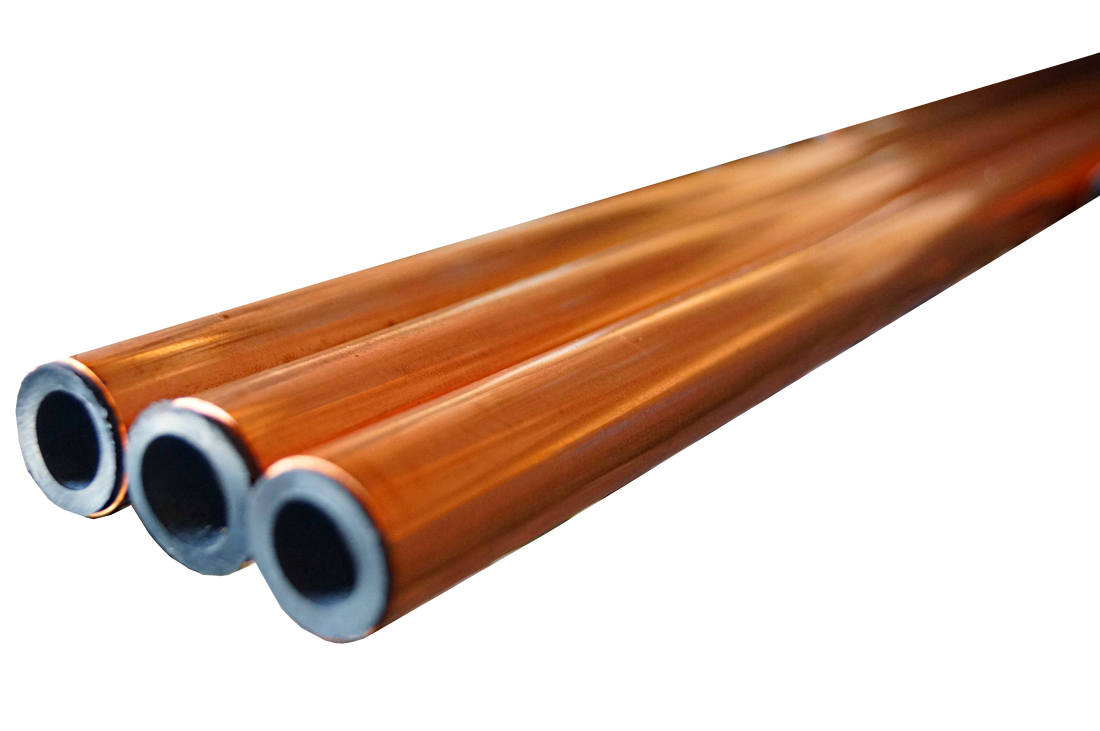
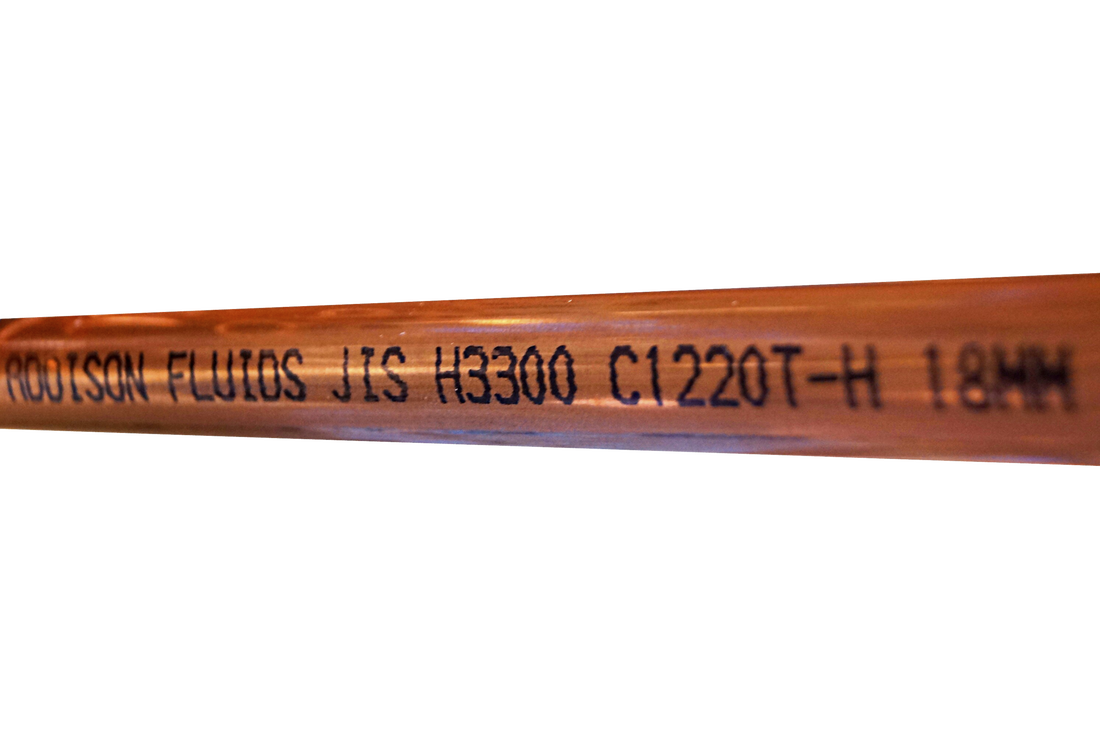
Copper pipe is drawn from phosphorus deoxidised copper — over 99.9% pure, supplied in straight 6 metre lengths to one of two standards depending on the job: JIS H3300 C1220T for water services, and ASTM B88 for HVAC and refrigeration, where the same outside diameter is offered in three wall thicknesses — Type K, L and M. Deoxidising with phosphorus is what makes it weldable and brazeable without the joint going porous.
The wall type is the decision that matters: K is the thickest, M the thinnest, and they share the OD, so the fittings do not change — only what the line will take. Copper is used for these duties because it resists corrosion in potable water, tolerates the pressures and temperatures of refrigerant work, and brazes reliably. The full wall table is in Wall thickness below.
| Copper pipe | Copper pancake coil | |
|---|---|---|
| Form | Straight lengths, 6 m | Coiled, wound flat |
| Size range held | 6 to 54 mm OD · 1/8" to 4" NB | 6 to 15 mm OD · 1/4" to 3/4" |
| Standards | JIS H3300 C1220T · ASTM B88 Type K/L/M | JIS H3300, alloy C1220T |
| Wall series | Type K, L and M at the same OD | Single wall per size |
| Changing direction | A fitting or a bending tool at each bend | Bends by hand — annealed soft temper |
| Joints in a run | One at every change of direction | A run can be made with no joints at all |
| Best for | Risers, mains, exposed and long straight runs | Refrigeration and capillary work, tight routing |
Same metal, different product. If you want copper you can bend by hand and run in one continuous piece, that is copper pancake coil, not pipe. If you need it above 15 mm, or you want a choice of wall thickness at one diameter, it has to be pipe. We stock both.
Specification
Everything that has to be on the enquiry, in one table.
| Property | Specification |
|---|---|
| Size | 6 mm to 54 mm OD · 1/8"NB to 4"NB |
| Material | Copper, over 99.9% pure |
| Dimensional standard | JIS H3300 C1220T · ASTM B88 |
| Finish | Phosphorus deoxidised |
| Wall thickness series | Type K (thickest) · Type L · Type M (thinnest) |
| Form | Straight lengths. Coiled copper is on copper pancake coils |
| Certification | EN 10204 3.1 inspection certificate as standard |
Copper is used worldwide for piping for three reasons: it is light, it is strong, and it is corrosion resistant. It carries potable water, refrigerant, gas and medical gas in everything from a single house to the largest industrial plant. It also carries the refrigerant in air conditioning — and in the fridges and freezers most people never think about.
Getting pure copper is the hard part. Extraction and refining to better than 99.9% is a more critical step in the production chain than the fabrication or the installation that follows it — which is why the mill certificate reports the copper and phosphorus figures rather than a long alloy analysis. Ours come from AF Hydro.
Buying copper pipe in Malaysia
Where the stock sits, what it costs to get it to you, and how fast it moves.
Stock, delivery and ordering
- Where the stock is — our office is in Kuala Lumpur, and copper is held in two warehouses: Johor Bahru and Singapore. Which one your order ships from depends on what is on the floor that week; either way the quoted price already covers transport, duty and tax. Addresses and direct lines are on the contact page.
- Dispatch — stock items leave the same or next working day.
- Delivery within Malaysia — 3 to 5 working days after dispatch. On an urgent stocked item, order to physical delivery can be under 3 working days — message us on WhatsApp and say it is urgent.
Copper is priced off the metal market, so a quote has a shorter shelf life than it does on steel. If you are budgeting rather than buying, say so and we will tell you how long the figure holds.
How a copper enquiry runs
Four things and we can price it without going back and forth:
- Size — nominal bore, inch OD or mm OD. Any of the three; we will convert.
- Type — K, L or M for ASTM B88, or JIS H3300 C1220T for waterworks.
- Form — straight lengths, or a pancake coil if you want a continuous run with no joints.
- Total metres — and whether cut lengths are needed.
A product specialist prices it within two working hours. Not sure which type? Tell us the service — potable water, refrigerant, gas, steam — and we will pick.
Material certification and traceability
What comes with the pipe as standard, and what the numbers on it mean.
Our copper pipe is supplied with an EN 10204 3.1 inspection certificate as standard, issued against the production lot. A 3.2, countersigned by a nominated third‑party inspector, can be arranged where the contract demands it — ask before the order.
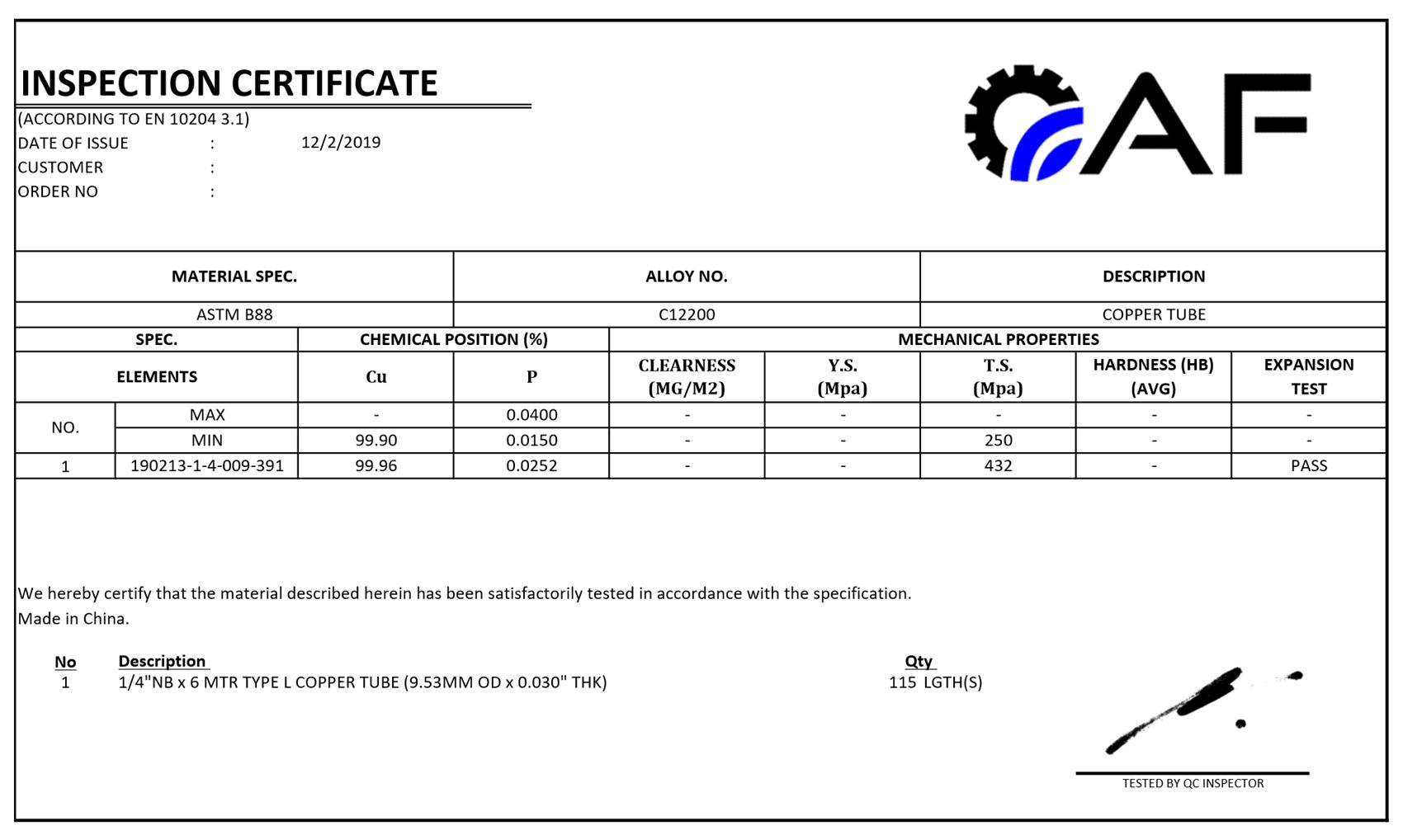
The expansion test is the one that matters on copper. It confirms the tube can be belled out without splitting — which is exactly what happens when a flare fitting is made up on site. A tube that passes the chemistry but fails expansion is no use to a plumber.
JIS H3300 or ASTM B88?
Two standards, built for two different services.
JIS H3300 C1220T
The Japanese Industrial Standard. Better suited to waterworks — showers, sanitary hot and cold, and general water distribution through a building or a house.
C1220T is phosphorus deoxidised copper: the phosphorus is added to scavenge oxygen out of the melt, which is what stops the copper going brittle when it is later brazed. That is why it is the alloy for plumbing rather than a pure electrolytic copper.
ASTM B88
The American Society for Testing and Materials standard, so it is accepted internationally. Better suited to heat‑sensitive service — air conditioning and refrigeration.
B88 is the standard that carries the Type K, L and M wall thickness series. Alloy C12200 is the equivalent phosphorus deoxidised grade. If a drawing says “Type L”, it is a B88 drawing.
In practice the choice is usually made for you by the specification, and we stock both. If nothing specifies one, tell us the service and we will pick — water tends to JIS, refrigerant and HVAC tend to B88.
Type K, L and M wall thicknesses
Same outside diameter, three different walls — and three different working pressures.
K, L and M are wall thickness series, not different metals. Type K is the thickest, Type L is thinner, Type M is thinnest. The outside diameter is identical across all three for a given size — so they all take the same fittings — but because the wall differs, so does the working pressure and therefore the service each one is fit for.
| Nominal bore | OD (inch) | OD (mm) | Type K wall | Type L wall | Type M wall |
|---|---|---|---|---|---|
| 1/8" | 1/4" | 6.35 | 0.035" | 0.030" | — |
| 1/4" | 3/8" | 9.53 | 0.035" | 0.030" | — |
| 3/8" | 1/2" | 12.70 | 0.049" | 0.035" | 0.025" |
| 1/2" | 5/8" | 15.88 | 0.049" | 0.040" | 0.028" |
| 5/8" | 3/4" | 19.05 | 0.049" | 0.042" | 0.028" |
| 3/4" | 7/8" | 22.23 | 0.065" | 0.045" | 0.032" |
| 7/8" | 1" | 25.40 | 0.065" | 0.050" | 0.035" |
| 1" | 1 1/8" | 28.58 | 0.065" | 0.050" | 0.035" |
| 1 1/4" | 1 3/8" | 34.93 | 0.065" | 0.055" | 0.042" |
| 1 1/2" | 1 5/8" | 41.28 | 0.072" | 0.060" | 0.049" |
| 2" | 2 1/8" | 53.98 | 0.083" | 0.070" | 0.058" |
| 2 1/2" | 2 5/8" | 66.68 | 0.095" | 0.080" | 0.065" |
| 3" | 3 1/8" | 79.38 | 0.109" | 0.090" | 0.072" |
| 3 1/2" | 3 5/8" | 92.08 | 0.120" | 0.100" | 0.083" |
| 4" | 4 1/8" | 104.78 | 0.134" | 0.110" | 0.095" |
| 5" | 5 1/8" | 130.18 | 0.160" | 0.125" | 0.109" |
| 6" | 6 1/8" | 155.58 | 0.192" | 0.140" | 0.122" |
Wall thicknesses to ASTM B88. Type M is not made in the two smallest sizes. We stock 6 mm to 54 mm — the larger sizes in the table are shown so you can read across from a drawing, and are available to order.
Sizing trap worth knowing: the outer diameter of a copper pipe is always 1/8 inch bigger than its nominal bore. A 2"NB copper pipe measures 2 1/8" across the outside — 53.98 mm. That holds for all three types, and it is why a tape measure on the outside will not give you the size to order by.
Which type for which system
The wall decides the duty.
Type K — thickest wall
- Water distribution
- Fire protection
- Oil and LPG gas
- HVAC
- Compression and flare fittings
The one to specify for buried service, fuel gas, or anywhere the pipe may take a knock.
Type L — middle wall
- Interior plumbing
- Fire protection
- Some HVAC applications
- Waterline repair
- Compression and flare fittings
The general‑purpose choice, and the one most often held in stock.
Type M — thinnest wall
- Flexible form
- Domestic water service
- Vacuum systems
- Compression and flare fittings
- Low pressure steam
Lightest and cheapest. Check it against the local plumbing code before you specify it inside a building.
Working with copper
Why it is the easiest of the four materials we stock to install.
Formability is the point
Copper is very flexible during installation because it forms so readily. It bends by hand at small sizes, takes a bender cleanly at larger ones, and can be belled or flared on site — which is what the expansion test on the certificate is checking for.
That formability is also why copper is the default for refrigerant lines: the run can follow the building rather than needing a fitting at every change of direction, and every fitting removed is a joint that cannot leak.
Joining it
- Compression fittings — no heat, no flame permit. See compression fittings.
- Flare fittings — the tube end is belled out to form the seal itself.
- Brazing — the phosphorus deoxidised alloy is chosen precisely so the copper does not embrittle when heated.
Support the run with pipe clamps. Copper is soft, so an unsupported horizontal run will sag between fixings and a vibrating one will work‑harden at the clamp.
Applications
Where copper pipe earns its place.
Potable water
The largest single use. Copper carries drinking water in homes and offices without leaching, and it is naturally bacteriostatic — which is why it has outlasted every material that was going to replace it.
HVAC and refrigeration
Refrigerant lines in air conditioning, and the circuits in refrigerators and freezers. Formability plus thermal conductivity is the combination nothing else matches at the price.
Fire protection and gas
Fire protection lines, and oil and LPG gas service in Type K. Also medical gas, where cleanliness of the bore matters as much as the pressure rating.
Buildings of every size
From a single house to the largest industrial plant. The same three characteristics carry it: light, strong and corrosion resistant.
Why buy copper pipe from RFS Hydraulics
Six things that decide whether a copper order goes smoothly.
Ready stock, not ordered in
We stock across the 6 mm to 54 mm range in Johor Bahru and Singapore rather than buying in against your enquiry, and stock items dispatch the same or next working day. Type and wall availability moves week to week, so send the size and type and we will confirm.
Both standards held
JIS H3300 C1220T and ASTM B88 together, so the standard is a specification decision rather than whatever the supplier happens to have.
3.1 certificate as standard
An EN 10204 3.1 inspection certificate comes with the pipe, reporting copper purity, phosphorus, tensile strength and the expansion test. There is a real one on this page.
Straight lengths or coils
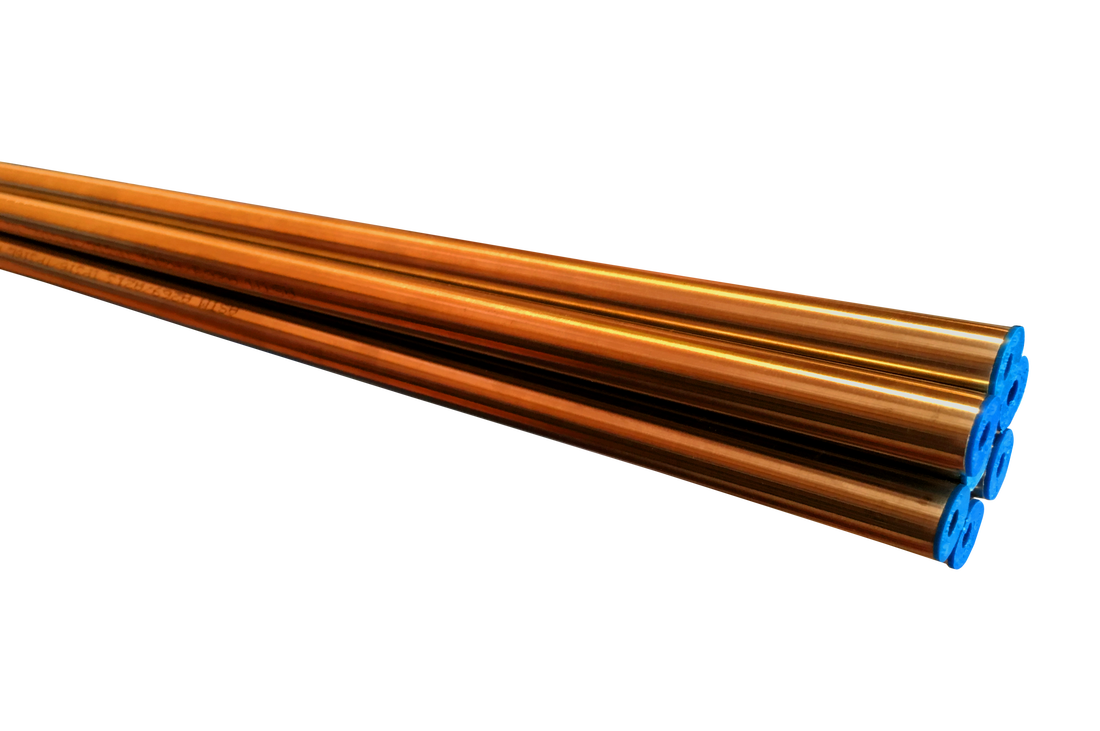
Racked straight lengths here, or pancake coils where you want a continuous run with no joints. Same material, two forms.
The fittings as well
We stock the compression fittings and pipe clamps that go with it, so the run arrives as one delivery from one supplier.
Any of the three size conventions
Nominal bore, inch OD or mm OD — send whichever the drawing uses and we will convert it. More about RFS Hydraulics.
Delivery within Malaysia is already inside the price. See the FAQ or the terms and conditions.
Watch the pipe
Copper pipe, in the warehouse.
Frequently asked questions
Eleven, from purity through sizing and weight to delivery.
What percentage of copper is in a copper pipe?
More than 99.9% pure copper. On the certificate reproduced above the actual figure is 99.96% against a 99.90% minimum. Extracting and refining copper to that purity is the critical step in the production chain — more so than the fabrication or installation that follows.
What is the difference between JIS H3300 and ASTM B88 copper pipe?
JIS H3300 C1220T is the Japanese standard and suits waterworks — showers and water distribution through a building. ASTM B88 is the American standard and suits heat‑sensitive service such as air conditioning and refrigeration. B88 is also the standard that carries the Type K, L and M wall series. We stock both.
How do I measure copper pipe size?
Copper is sized by nominal bore, inch OD or metric OD — and the outer diameter is always 1/8 inch bigger than the nominal bore. So a 2"NB pipe measures 2 1/8" (53.98 mm) across the outside. That holds for all three types. Send whichever convention your drawing uses and we will convert it.
What is the difference between copper pipe Type K, L and M?
They are wall thickness series, not different metals. Type K is thickest, Type L thinner, Type M thinnest — and the outside diameter is the same across all three, so they take the same fittings. The wall sets the working pressure and therefore the duty: K for water distribution, fire protection, oil and LPG gas; L for interior plumbing and repair; M for domestic water, vacuum and low pressure steam. Full table on this page.
What is the wall thickness of Type L copper pipe?
It varies with size. 0.030" at 1/8" and 1/4"NB, 0.035" at 3/8", 0.040" at 1/2", 0.050" at 7/8" and 1", 0.070" at 2". The full table lists Type K, L and M against every size from 1/8" to 6"NB.
Why is the copper phosphorus deoxidised?
Phosphorus is added to scavenge oxygen out of the melt. Without it, copper containing oxygen becomes brittle when it is heated — which is exactly what happens at a brazed joint. That is why plumbing copper is C1220T or C12200 rather than a pure electrolytic grade, and why the certificate reports phosphorus alongside copper.
Do you supply copper in coils?
Yes — see copper pancake coils, in 1/4" to 3/4" OD and 6 to 15 mm. A coil lets you run a continuous length with no joints at all, which is why it is the usual choice for refrigerant runs. Straight lengths are what this page covers.
What is the difference between copper pipe and copper tube?
In everyday use the two words are used interchangeably for the same product, and copper is the one material where that is more or less harmless — unlike steel, where pipe and tube are genuinely different standards. What matters with copper is that you say which sizing convention you are quoting: nominal bore, inch OD or mm OD. Because the OD is always 1/8" larger than the nominal bore, “1/2 inch copper” is ambiguous on its own — it could mean 1/2"NB (15.88 mm OD) or 1/2" OD (12.70 mm).
Can copper pipe be used for gas?
Yes — and Type K is the one specified for it. Its thicker wall is why the K series is listed for oil and LPG gas service as well as water distribution and fire protection. Type L and Type M are not intended for fuel gas. Always check the requirement against the local gas code for the installation, because the code, not the pipe standard, is what governs what is permitted.
How do I work out the weight of copper pipe?
kg/m = 0.02809 × wall × (OD − wall), both in mm, taking the density of copper as 8.94 g/cm³. Copper is about 12% heavier than stainless for the same dimensions, which matters on a long vertical riser or a freight estimate. A 15 mm OD tube with a 1.0 mm wall is 0.393 kg/m. Remember to use the real OD, not the nominal bore.
Can copper pipe be bent?
Yes — formability is one of the main reasons copper is used. Straight lengths in the smaller sizes take a bender cleanly, and every bend you make is a fitting you do not have to buy or braze, which removes a potential leak point. For a run with a lot of shape changes, a pancake coil in soft annealed temper is the better starting point: it bends by hand and can be paid out as one continuous piece with no joints at all.
Catalogue
Full dimension and wall thickness tables. Direct PDF download — no form, no email address.
Sizes and wall thicknesses are in the catalogue; stock and price are not, so send us the list and we will confirm both.
Related: copper pancake coils · stainless steel tubes · hydraulic steel tubes · compression fittings · pipe clamps
Send the size, the type and the total metres.
One length or a full bill of materials — priced by a product specialist within two working hours.