
Home › Products › Low pressure fittings › Class 150 fittings
SS316 · 150 lbClass 150 threaded fittings in SS316, 1/8" to 4"
Threaded low‑pressure fittings in ASTM A351 CF8M / 316 stainless, DN6 to DN100, rated 150 lb. Elbows, tees, couplings, unions, nipples, caps, plugs and bushes, in NPT or BSPT. Threaded means you can take it apart again — no welding, and no hot work permit.
Get a quotation within 2 working hours
Send the part number, standard, size or quantity. Stock in Malaysia or Singapore, ISO 9001:2015 certified.
What class 150 fittings are
Threaded stainless fittings for low‑pressure pipework.
Class 150 fittings change direction and make connections in a piping system, and they are used to carry low‑pressure fluid or gas. The pipe arrives with a threaded end, and the fitting screws onto it to continue or branch the run. Sizes run 1/8" to 4" — DN6 to DN100.
You will see them called class 150# or 150 LB fittings; all three names mean the same thing. They turn up mainly in plumbing, waterworks and oil and gas where the pressure requirement is modest, and they are usually chosen for non‑critical, low‑cost applications rather than for duty.
- The real advantage is that they come apart. A threaded fitting lets the installer reassemble the run at any time, and welding is not mandatory. On a live site that means no hot work permit and no welder.
- Stainless, not brass or malleable iron. These are ASTM A351 CF8M / 316 stainless. Why that choice matters.
- ⚠ NPT and BSPT are not interchangeable. The thread flank angles differ — 60° against 55° — and mixing them is the single most common failure on these fittings. The detail.
- Low pressure means low pressure. If you need a rated, high‑pressure joint, you want high pressure fittings or compression fittings instead.
Class 150 fittings — the specification
Everything that goes on a purchase order, in one table.
| Size range | 1/8" to 4" — DN6 to DN100 |
| Class | 150 lb — also written 150# or class 150 |
| Material | Stainless steel SS316, to ASTM A351 CF8M |
| Connections | NPT National Pipe Thread · BSPT British Standard Pipe Tapered |
| Fitting types | Elbows 90° and 45° · street elbows · tees · couplings · reducing couplings · unions · hex nipples · reducing hex nipples · caps · plugs · hex bushes |
| Sealing | Thread sealant — PTFE (Teflon) tape on the male thread |
| Marked on the part | Size, class and material are cast into the body — so a fitting already installed can be identified without paperwork |
| Typical duty | Low‑pressure water, fluid and gas — plumbing, waterworks, cooling, fire protection, shipbuilding |
| Reassembly | Threaded, so it can be dismantled and rebuilt. Welding not required |
| Stock | Held in Johor Bahru, with some orders shipping from Singapore |
The six shapes that cover most of a run.
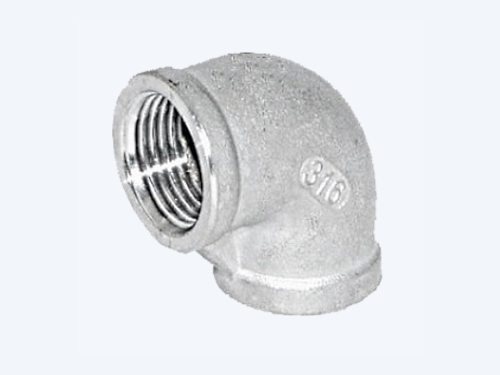
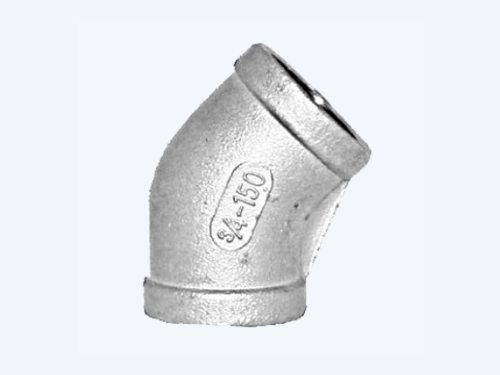
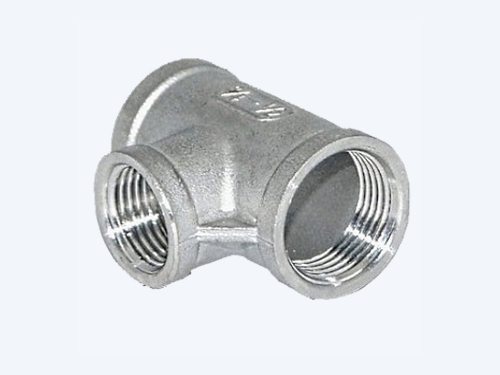
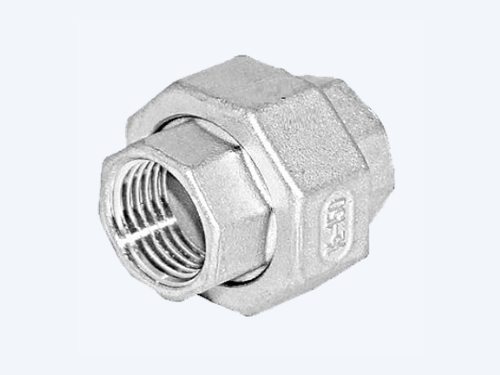
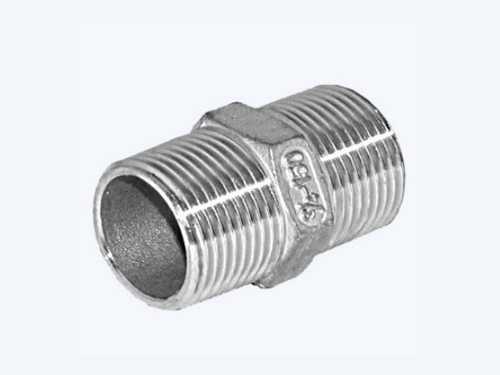
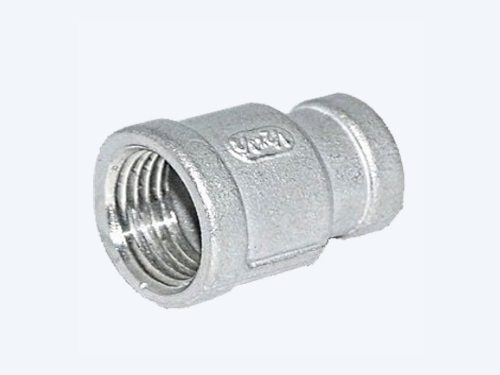
NPT or BSPT — and why you cannot mix them
Five degrees of flank angle, and the joint leaks.
There are two thread types on low‑pressure threaded fittings: NPT (National Pipe Thread) and BSPT (British Standard Pipe Tapered). Both are tapered, both look similar in the hand, and both will start to screw together. They are not compatible.
| NPT | BSPT | |
|---|---|---|
| Full name | National Pipe Thread | British Standard Pipe Tapered |
| Thread flank angle | 60° | 55° |
| Form | Tapered | Tapered |
| Compatible with the other? | No | No |
- ⚠ NPT and BSPT threads cannot be used together. The angle across the flanks of the thread is 60° on NPT and 55° on BSPT. The connection has to correspond on both sides.
- They will engage, which is the danger. Because both are tapered and the pitches are close on several sizes, a mismatched pair goes together far enough to feel tight. It seals on tape rather than on metal, and it lets go later — usually under vibration or a thermal cycle.
- Tell us which one you have, not which one you want. If a run is already NPT, everything added to it is NPT. We stock both; ordering the wrong one is the expensive mistake, not the price difference.
- If you genuinely have to join the two, that is a job for an adaptor with one thread form on each end — ask us, do not force it.
Why stainless, and which stainless
ASTM A351 CF8M, which is the cast equivalent of 316.
These fittings are made to conform to ASTM A351 CF8M / 316 stainless steel. CF8M is the cast grade corresponding to wrought 316, which is what you want on a moulded fitting body rather than a machined bar part.
Stainless ensures corrosion resistance and overall durability. The alternatives you will be offered are brass and malleable iron, and both have lesser corrosion resistance than stainless. That is the whole reason to specify stainless here: it is applicable across all systems and lasts, rather than being fine until the first wet year.
Against brass
Brass is cheaper and easier to machine, and it is perfectly serviceable on clean cold water indoors. It has lower corrosion resistance, and it is the wrong choice where chlorides, washdown or weather are involved.
Against malleable iron
Malleable iron is the traditional low‑cost fitting. Again, lower corrosion resistance — and once it starts, a galvanized iron fitting in a stainless run becomes the sacrificial part in the system.
Why SS316 rather than 304
316 carries molybdenum, which is what buys the resistance to chlorides — seawater, coastal air, washdown chemicals. On the coast, in a plant, or anywhere near salt, that is the difference that matters.
Installing them without leaks
Four steps, and two of them are about restraint.
Threaded fittings leak for predictable reasons. These are the four steps to minimise installation leakage.
| Step | What to do |
|---|---|
| 1 | Thread the male fitting with PTFE (Teflon) tape — plumber’s tape — which establishes a tighter seal and prevents seepage. |
| 2 | Steer clear of excess tape. More is not better; too much stops the threads pulling up properly and can split a female port. |
| 3 | Tighten with a wrench, but avoid excessive screwing, which can damage the fitting or the pipe. |
| 4 | Match the fitting size to the pipe size, and keep the alignment true — alignment must be considered when making the connection, not corrected afterwards. |
- Tape goes on the male thread only, wound in the direction that tightening will not unwind.
- Over‑tightening is the most common damage. A tapered thread seals by wedging; past that point you are only stretching the female port. Stainless does not forgive it the way brass does.
- Fight the alignment at layout stage, not at the joint. A fitting pulled into line by the wrench carries that load for the rest of its life — and that is where it eventually weeps. Design in a union where you know you will need to break the run.
Where they get used
Light duty, continuous passage of liquid.
Class 150 fittings are specified across light‑duty industries where the job is to keep liquid moving, and where the pressure is modest enough that a threaded joint is the sensible answer.
Industrial cooling water
Cooling water circuits, where there is a lot of pipework, the pressure is low and the ability to dismantle a section for cleaning matters more than ultimate rating.
Shipbuilding
Onboard service lines. This is where SS316 rather than brass or iron earns its money — salt air, salt water and years between dry docks.
Plumbing and waterworks
The everyday case, and the reason threaded fittings still dominate: no hot work, and any competent fitter can extend or repair a run with hand tools.
Fire protection
Sprinkler and hydrant service pipework, where the run is long, the fittings are many and the system spends its life full and static.
Oil and gas, low pressure
Utility and service lines rather than process. Low pressure is the operative constraint — for process duty you are into high pressure fittings.
Plant and general industry
Air, water and drain services around machinery, where the run gets modified more often than it gets designed and reassembly is a real requirement.
Why buy class 150 fittings from us
A commodity part, bought properly.
We ask which thread you have
NPT or BSPT is the question that decides whether the delivery is useful. We ask it on every enquiry rather than assuming, because the two do not mix.
SS316, stated on the quotation
ASTM A351 CF8M / 316 — not brass, not malleable iron, and not 304 quietly substituted. If you want a cheaper material we will price it, but you will know that is what you are getting.
We work out the fitting list
Send the layout or the bill of materials and we return the count of each shape — and we will point out where an equal tee plus a bush beats a reducing tee on price and availability.
Unions where you will need them
Most lists arrive without any. We flag where a union should go — either side of anything you will have to remove — because that is what makes the run maintainable.
Full range, one order
1/8" to 4" across elbows, tees, couplings, unions, nipples, caps, plugs and bushes. One line item per shape, not a scavenger hunt across suppliers.
Landed price, stock both sides
Johor Bahru, some orders from Singapore, at a landed price — transport, currency, duties and taxes already inside the figure.
Questions we get asked
The ones that come up on the phone.
What does class 150 actually mean?
It is a pressure class, written class 150, 150# or 150 LB — all the same thing. It designates a low‑pressure rating for threaded pipe fittings, which is why these are specified for non‑critical, low‑cost applications rather than for process duty. If your line is rated in bar or MPa and matters, you are looking at the wrong family — see high pressure fittings.
Can I screw an NPT fitting onto a BSPT pipe?
No. The angle across the flanks of the thread is 60° on NPT and 55° on BSPT, so the two cannot be used together — the connection has to correspond on both sides. The trap is that they will start to engage and feel tight, because both are tapered. It seals on tape rather than metal and lets go later, usually under vibration or a thermal cycle. The comparison.
What material are they, exactly?
ASTM A351 CF8M / 316 stainless steel. CF8M is the cast grade equivalent to wrought 316, which is the right specification for a moulded fitting body. The molybdenum in 316 is what gives it chloride resistance — the reason to choose it over 304 anywhere near salt, washdown or coastal air.
Why stainless rather than brass or malleable iron?
Corrosion resistance and durability. Brass and malleable iron both have lesser corrosion resistance than stainless, which is exactly why stainless is specified here — it is applicable in all systems and it lasts. Brass is fine on clean cold water indoors; it is the wrong answer where there are chlorides, washdown or weather. And a galvanized iron fitting in a stainless run becomes the sacrificial part.
What sizes do you stock?
1/8" to 4" — DN6 to DN100. That covers the normal range of low‑pressure threaded pipework. Tell us the sizes and the shapes and we will confirm what is on the floor and what comes in to order, with the lead time attached to the price rather than sent afterwards.
Which fitting shapes are available?
Elbows at 90° and 45°, plus street elbows with one male end; tees; full and reducing couplings; unions; hex nipples and reducing hex nipples; round caps; hex and square head plugs; and hex bushes. Between them you can build and modify a run without welding anything.
Do I need a union, or will a coupling do?
A coupling joins two pipes permanently — to break it you have to unscrew one of the pipes. A union has a conical seat and a loose nut, so the joint can be broken and remade in place. Put a union either side of anything you will need to remove: a pump, a strainer, a valve, an instrument. Most bills of materials arrive without any, and that is the thing we most often add.
How do I stop the joints leaking?
Four things. PTFE (Teflon) tape on the male thread to establish the seal; do not over‑apply the tape; tighten with a wrench but do not over‑screw, which damages the fitting or the pipe; and match the sizes and keep the alignment true. Over‑tightening is the most common damage — a tapered thread seals by wedging, and past that point you are only stretching the female port. All four steps.
Can I take the run apart later?
Yes, and that is the main reason to use threaded fittings. Threaded low‑pressure fittings allow the installer to reassemble at any time, and welding is not mandatory. On a live site that means no hot work permit and no welder — which on a modification job is often worth more than the difference in part price.
How do I identify a fitting already installed?
Read it. The size, class and material are cast into the body — you will see markings like 1/4 – 150 and 316 on the fittings in the photographs above. So a fitting on the wall can be matched without drawings or paperwork. Send us a photo of the marking if you are not sure and we will tell you what it is.
Where are these used?
Plumbing, waterworks, and oil and gas where the pressure requirement is low. In practice: industrial cooling water systems, shipbuilding, plumbing systems and fire protection, plus general plant air, water and drain services. Light duty, and the job is continuous passage of liquid rather than holding a rated pressure.
Do you deliver to Singapore?
Yes. Stock is held in Johor Bahru and some orders ship from Singapore — both our own stock, neither bought in against your enquiry. A stocked item can be delivered in under three working days. The quote is a landed price: transport, currency, duties and taxes are already inside the figure, so what you approve is what you pay.
Catalogue
Direct PDF download — no form, no email address.
Related: camlock fittings for quick‑release hose connections · push‑in fittings for nylon and PU tube · high pressure fittings when the rating matters · compression fittings for tube · stainless steel pipe to thread · low pressure valves to go in the run.
Send the list and the thread form
Tell us NPT or BSPT, the sizes and the shapes, and we will price the lot in SS316 at a landed price — and flag where a union should go before you find out the hard way. Stock in Johor Bahru and Singapore.