
Pipe & tube clamp supplier in Malaysia — four DIN 3015 lines, 6 mm to 406 mm
Channel support systems that hold a line securely and damp the vibration out of it — all to DIN 3015. Bodies in polypropylene, polyamide, aluminium and rubber‑insert, with plates and bolts in galvanized or stainless steel. They stack and stagger, so a bank of lines takes the least space the run allows.
Get a quotation within 2 working hours
Send the part number, standard, size or quantity. Stock in Malaysia or Singapore, ISO 9001:2015 certified.
The four lines we stock
Series and size, body material, accessory material and standard on every card. All four are DIN 3015 — what separates them is size reach and what the body is made of.
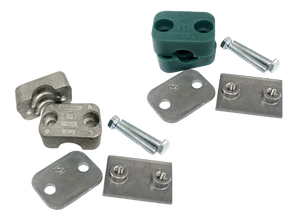 The reference line — all three series
Stauff clamps
SeriesStandard 6–102 · heavy 6–406 · twin 6–42 mm BodyPolypropylene · polyamide · aluminium AccessoriesSS316 · galvanized steel StandardDIN 3015 Ready stock→ Exclusive to us — held in depth
Tubeclo tube clamps
SeriesStandard 6–102 · heavy 6–406 · twin 6–42 mm BodyPolypropylene · polyamide · aluminium Temperature−40 to +300 °C AccessoriesTop cover plate · bottom weld plate · hexagon bolt Ready stock→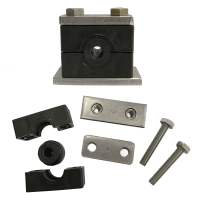 Rubber insert — extra damping
Tubeclo rubber insert clamps
SeriesStandard 6–32 · heavy 6–172 mm BodyPolypropylene · polyamide, with a thermoplastic elastomer insert AccessoriesSS316 · galvanized steel StandardDIN 3015 Ready stock→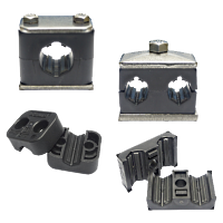 Anti-corrosion — marine and washdown
Stauff anti-corrosion clamps
SeriesStandard 6–25.4 · twin 6–25.4 mm BodyFlame‑retardant PPV0 AccessoriesStainless V4A · W55 StandardDIN 3015 Ready stock→A clamp is what stops a tube run destroying itself. The body is a square block with a ribbed bore, so it grips the line while damping vibration and noise instead of passing them into the structure. A complete set is two identical halves plus a top cover plate, a bottom weld plate and a hexagon bolt — and because the bodies stack, several lines can share one weld plate.
Getting the specification right
Which line suits the run, and the four things we need in order to quote it.
Choosing between the four
- General hydraulic and pipework support — Stauff clamps or Tubeclo tube clamps. Same three series, same size reach to 406 mm, same body materials. Tubeclo is exclusive to us, which is why we hold it deeper.
- Above 120 °C — the aluminium body, and only that. It takes 300 °C, where polypropylene stops at 90 and polyamide at 120.
- Heavier pipe, or more damping — rubber insert clamps. The elastomer insert takes more movement than a rigid bore.
- Marine, offshore or washdown — Stauff anti‑corrosion clamps. Flame‑retardant PPV0 body with V4A stainless accessories, though the range stops at 25.4 mm.
If the environment is corrosive but you need a size above 25.4 mm, the answer is usually a standard clamp with stainless accessories rather than the ACT line. Ask us and we will price both.
What to send us
Four things and we can quote without going back and forth:
- Tube or pipe OD in mm — the outside diameter the clamp grips. This picks the size.
- How many lines, and whether they stack — single, twin or a stacked bank, and the height available.
- Temperature and environment — this decides the body material and whether the accessories need to be stainless.
- Quantity per size — clamps are almost always a schedule rather than a single item.
Working from a drawing or a line list? Send it as it is — a product specialist will read the sizes off it.
Catalogues
Six clamp catalogues — four Tubeclo series and two Stauff. Bore tables, clamp dimensions, plate and bolt sizes and the full part numbering. Direct PDF downloads, no form.
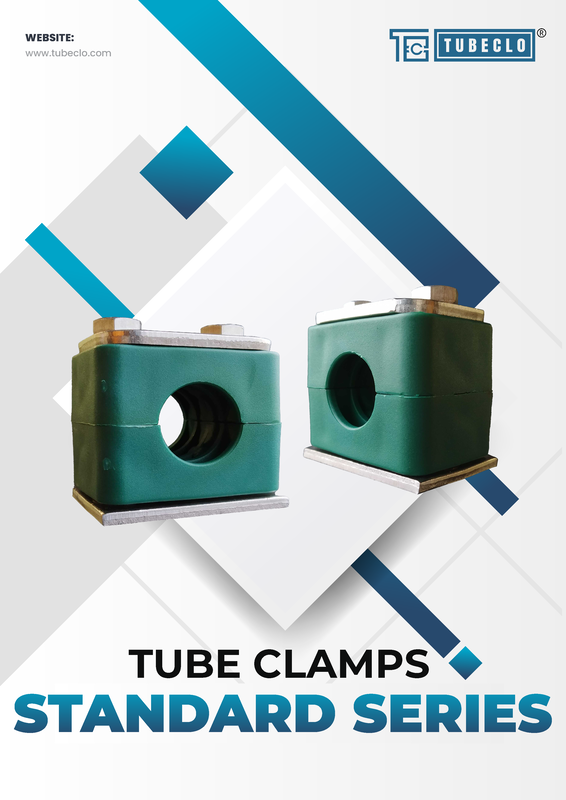 Tubeclo Standard ClampsTubeclo · 3.7 MBPDF
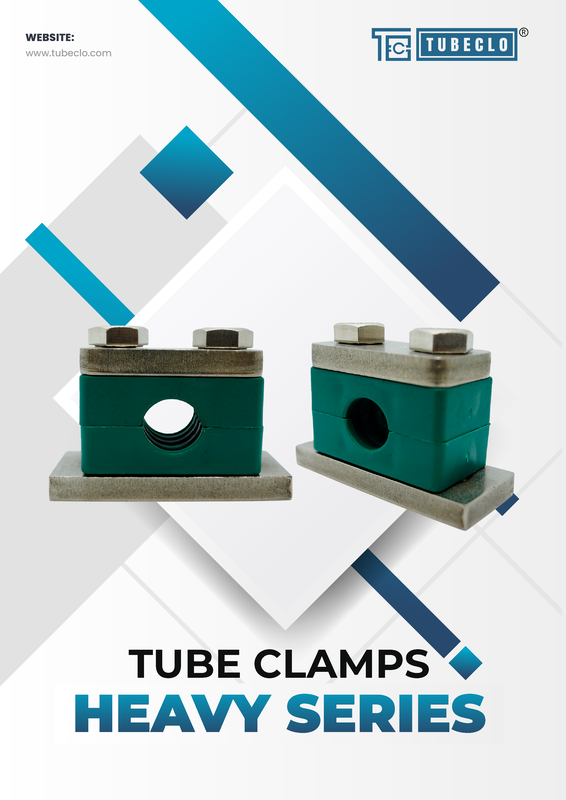 Tubeclo Heavy ClampsTubeclo · 59 MBPDF
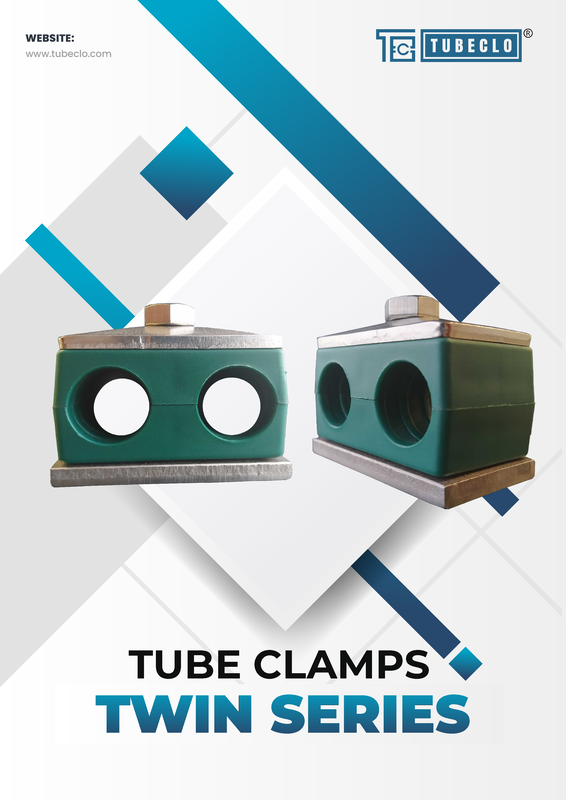 Tubeclo Twin ClampsTubeclo · 22 MBPDF
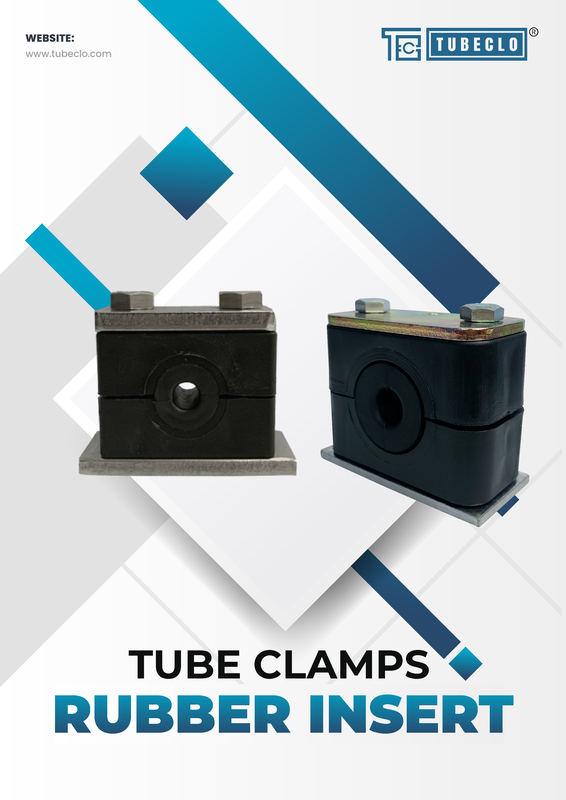 Tubeclo Rubber Insert ClampsTubeclo · 7.6 MBPDF
 Stauff ClampsStauff · 2.0 MBPDF
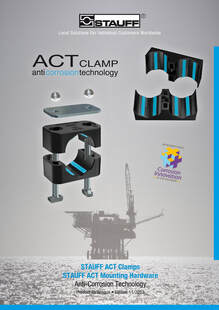 Stauff Anti-Corrosion ClampsStauff · 6.3 MBPDF
What is in them
- Bore tables — the tube or pipe OD each clamp size takes. This is how you pick the size.
- Clamp dimensions — body height, width and bolt centres, so you can check the space in the run.
- Plates and bolts — top cover plate, bottom weld plate and hexagon bolt per clamp size.
- Part numbering — how body code, size and accessory grade combine into an order code.
Before you download
- The Tubeclo heavy series catalogue is a large file at 59 MB — worth doing on wi‑fi. The rest run 2 to 22 MB.
- They open in a new tab. Nothing is gated: no form, no sign‑up, no email address.
- Dimensions and part numbers are in the catalogue; stock and price are not. Send the tube OD and quantity and we will confirm both.
All 6 in the catalogue library →
About Tubeclo → · about Stauff →
Send the tube OD, the quantity and where it is going.
One clamp or a full schedule — priced by a product specialist within two working hours.