
Home › Products › Pipes and tubes › Stainless steel tubes
Dural · ready stockSS316 / SS316L stainless steel tubes to ASTM A269 & ASTM A213, 4 mm to 60 mm
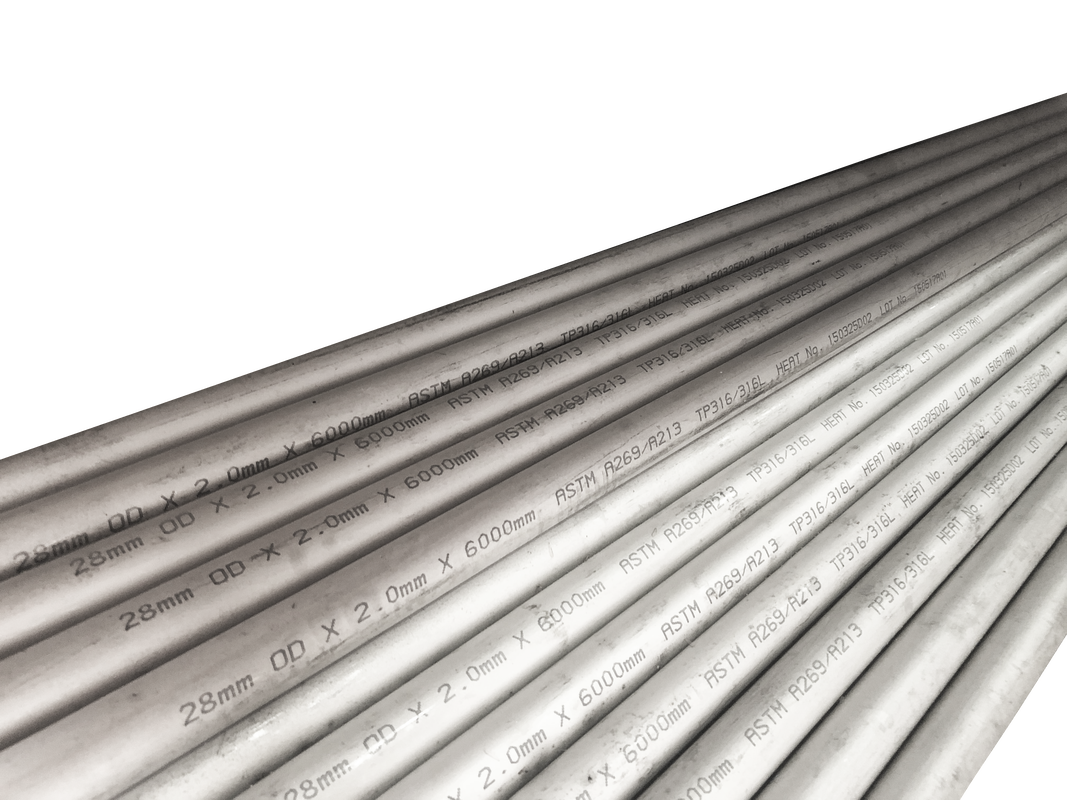
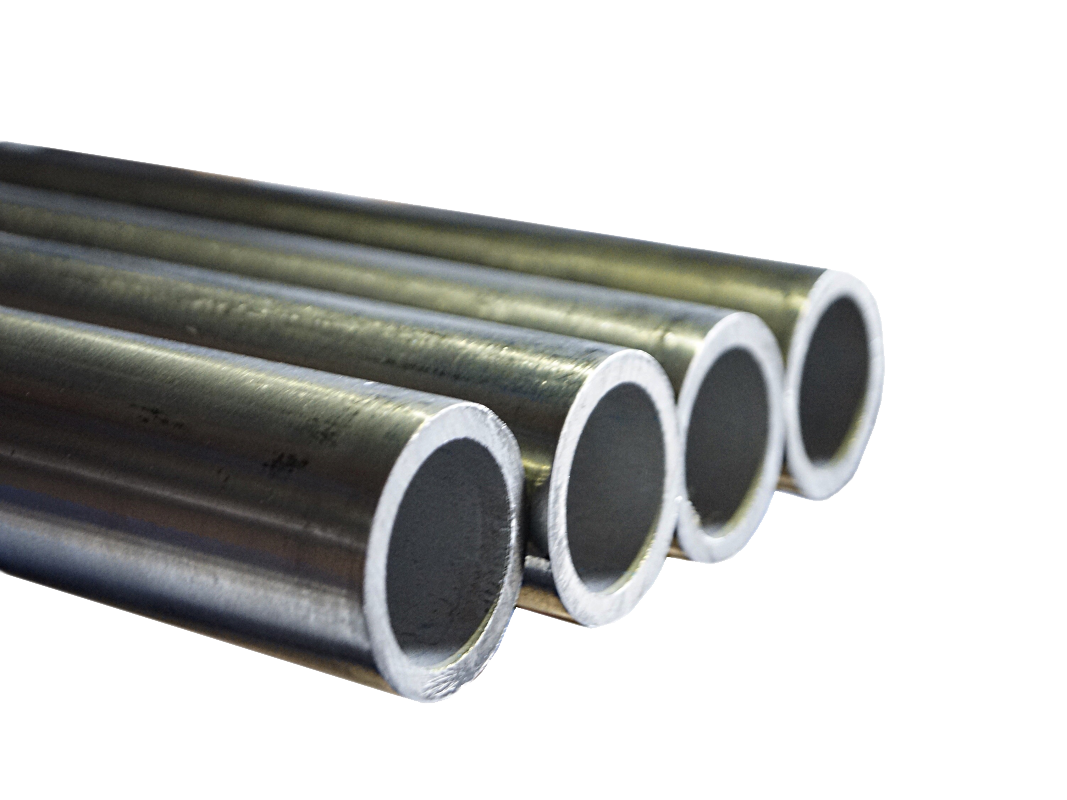
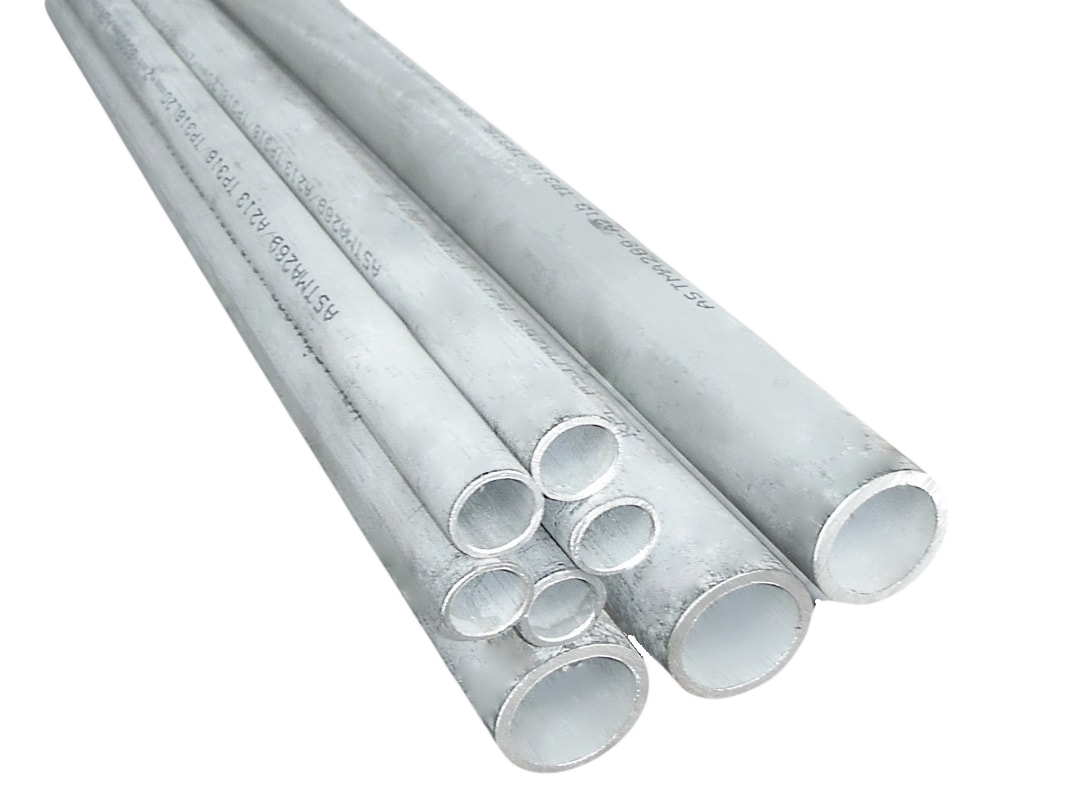
4 mm to 60 mm OD in 6 metre lengths, marked continuously along the tube with OD, wall, grade, standard, heat number and maker. Three finishes: annealed and pickled, polished 320 grit and bright annealed.
Get a quotation within 2 working hours
Send the part number, standard, size or quantity. Stock in Malaysia or Singapore, ISO 9001:2015 certified.
What stainless steel tube is, and when you need it
Sized on outside diameter — which is the whole difference from pipe.
Stainless steel tube is a seamless, cold‑finished hollow section made to ASTM A269 / A213 and sized on its outside diameter and wall thickness. The OD is the controlled dimension and is held to a tight tolerance; the wall is a separate choice, so the bore moves with the wall rather than being fixed. That is deliberate — every compression and twin‑ferrule fitting in the range grips the outside of the tube, so the OD has to be right to a few hundredths.
You need tube rather than pipe wherever a fitting has to seal on the OD without welding: instrument and control lines, sampling and process runs, hydraulic and pneumatic circuits, and any marine or chemical duty where SS316 is specified for corrosion rather than for strength. The three finishes we hold change the surface, not the dimensions — see the grade and tolerance data below.
| Stainless steel tube | Stainless steel pipe | |
|---|---|---|
| Sized on | OD and wall — 4 to 60 mm | Nominal bore and schedule — 1/8" to 4" |
| Standard | ASTM A269 / A213 | ASTM A312 · ASME SA312 |
| The fixed dimension | The outside diameter, to a tight tolerance | The nominal bore designation — a label, not a measurement |
| Joined by | Compression and twin‑ferrule fittings gripping the OD | Threaded, welded or flanged |
| Typical duty | Instrument, control and process lines | Bulk fluid runs and structural work |
| Bore | Moves with the wall you choose | Moves with the schedule you choose |
They are not interchangeable, and nothing converts between them. A fitting made for 12 mm tube will not grip 1/4" pipe, because a 1/4" pipe is not 12 mm on the outside. If your drawing says NB or gives a schedule, you want stainless steel pipe. We stock both.
Specification
Everything that has to be on the enquiry, in one table.
| Property | Specification |
|---|---|
| Outer diameter | 4 mm to 60 mm · 1/4" OD to 2" OD |
| Material | TP316 / SS316 · TP316L / SS316L |
| Dimensional standard | ASTM A269 / A213 |
| Length | 6 metres per length |
| Finishes | Annealed and pickled (AP) · polished 320 grit · bright annealed (BA) |
| Molybdenum | MO2.0 and MO2.5 — MO2.5 holds a minimum 2.5% molybdenum content |
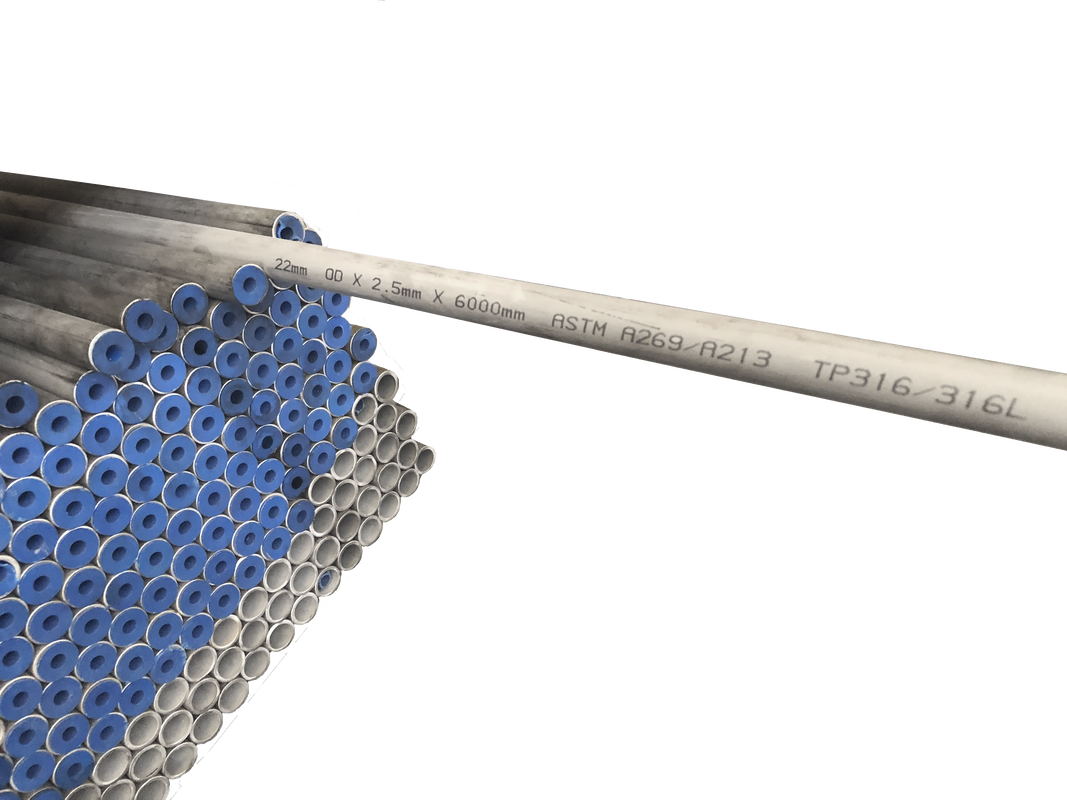
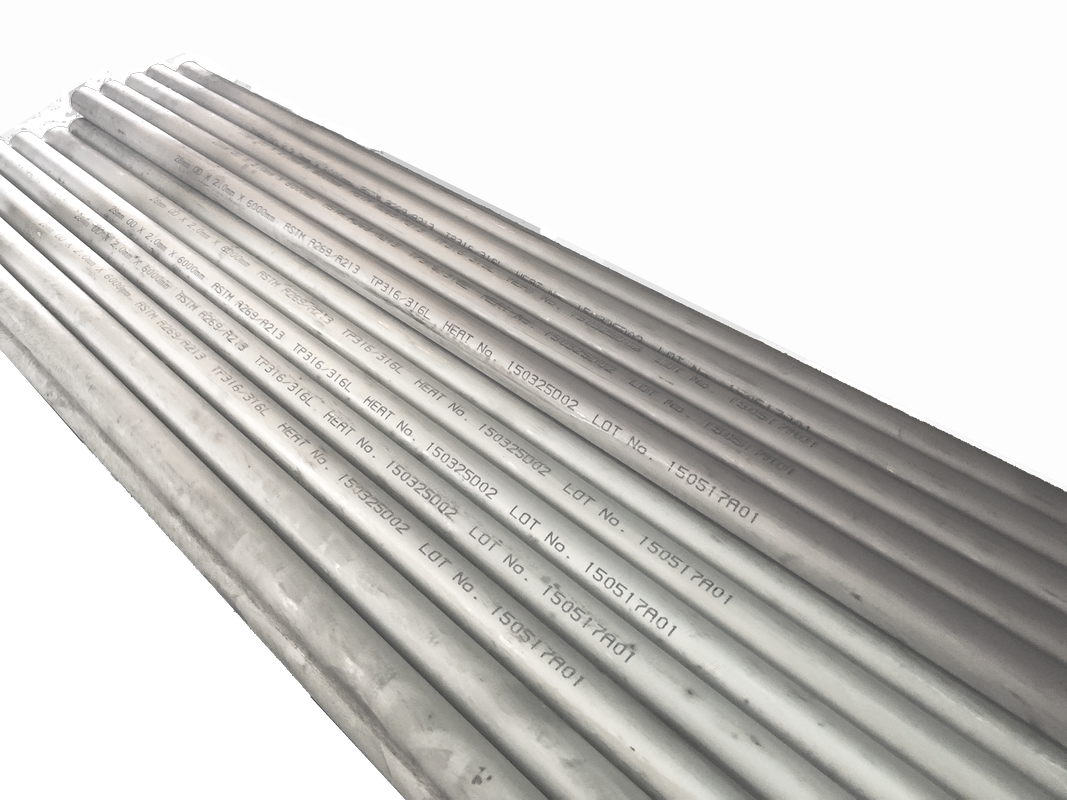
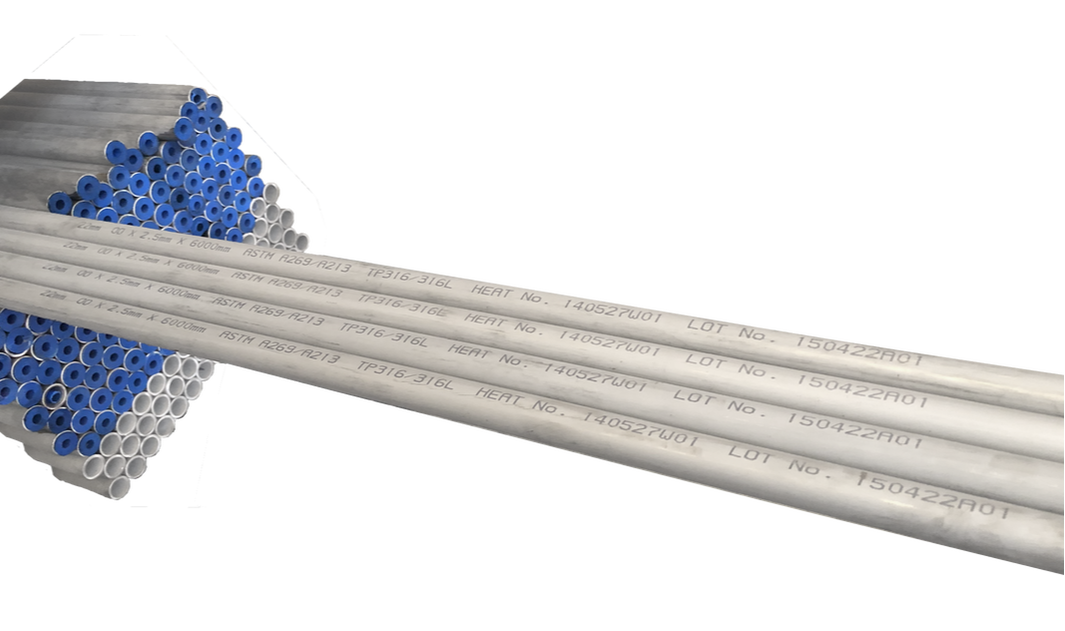
| Marking | Continuous along the length: OD, wall thickness, grade, standard, heat number, manufacturer |
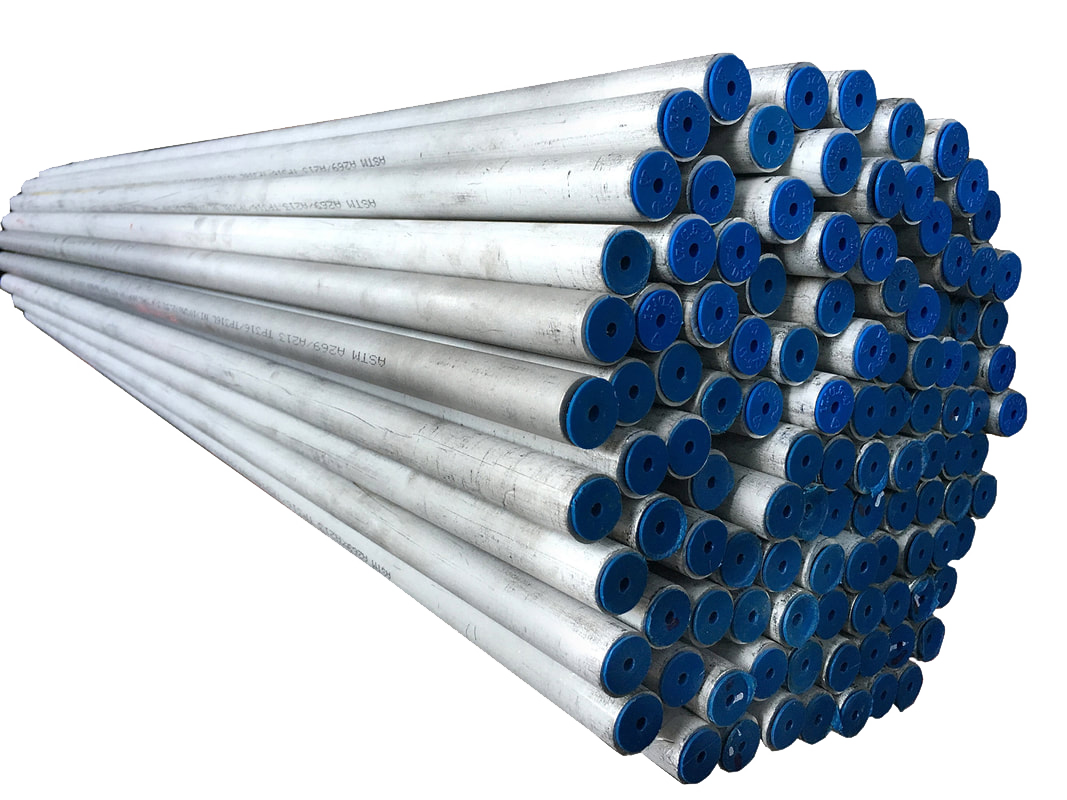
Stainless steel tubes are made to the dimensional standards of ASTM A213 / A269, published by ASTM International — formerly the American Society for Testing and Materials. They are supplied in two grades, TP316 and TP316L, hence SS316 and SS316L; the L stands for low carbon. Sizes run from 4 mm to 60 mm in 6 metre lengths, marked continuously along the tube with outer diameter, thickness, grade, standard, heat number and manufacturer name. Ours come from Dural.
Buying stainless steel tube in Malaysia
Where the stock sits, what it costs to get it to you, and how fast it moves.
Stock, delivery and ordering
- Where the stock is — our office is in Kuala Lumpur, and tube is held in two warehouses: Johor Bahru and Singapore. Which one your order ships from depends on what is on the floor that week; either way the price you are quoted already covers transport, duty and tax. Addresses and direct lines are on the contact page.
- Dispatch — stock items leave the same or next working day, and we book forwarder collection within one working day of payment clearing.
- Delivery within Malaysia — 3 to 5 working days after dispatch. On an urgent stocked item, order to physical delivery can be under 3 working days — message us on WhatsApp and say it is urgent.
- Delivery cost — already inside the product price, along with transport, currency conversion, duties and taxes. Nothing is added afterwards.
Exporting out of Malaysia? Add customs clearance in the destination country, which we cannot put a figure on. Payment terms and claim periods are in the FAQ.
How a tube enquiry runs
Four things and we can price it without going back and forth:
- Outer diameter and wall thickness — in mm or inches. Tube is sized on OD, not on bore.
- Grade — SS316, SS316L, or dual spec if the job accepts either.
- Finish — annealed and pickled, polished 320 grit, or bright annealed.
- Total metres — and whether you want 6 m mill lengths or cut lengths.
A product specialist prices it within two working hours. Working from a drawing or a bill of materials? Send it as it is and we will read the sizes off it.
Material certification and traceability
What comes with the tube as standard, and what to ask for if the contract wants more.
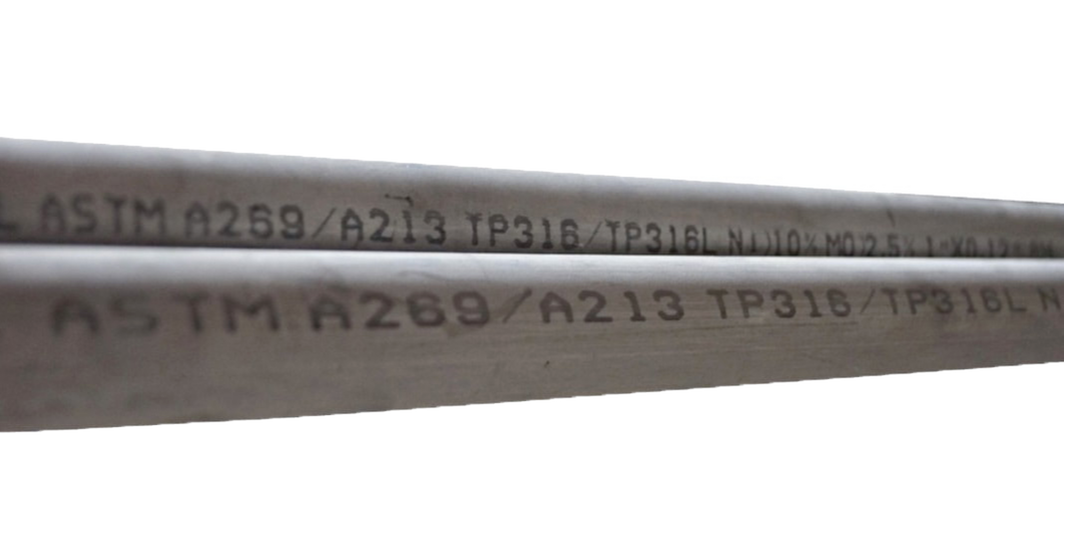
Every length we hold is marked continuously along the tube with outer diameter, wall thickness, grade, standard, heat number and manufacturer. That matters more than it sounds. Because the marking repeats along the length instead of sitting on a bundle tag, a certificate can still be matched to the piece in your hand after the bundle is broken and the tube has been cut.
| Document | What it is | When it is asked for |
|---|---|---|
| Mill test certificate (MTC) | The mill’s report for one specific heat — the chemical analysis and mechanical test results for the melt your tube was rolled from. | Almost any inspected job. This is the document people mean when they say “cert”. |
| EN 10204 3.1 | A mill certificate validated by the manufacturer’s own inspection representative, independent of the production department. | The usual contractual requirement on oil and gas, refinery and marine work. |
| EN 10204 3.2 | Validated by both the manufacturer and an inspector nominated by the purchaser or an independent body. | Where the client or a third party insists on witnessing the tests. |
| PMI (positive material identification) | An on‑the‑spot alloy check, usually handheld XRF, confirming the metal in front of you is the grade it is marked as. | Site verification, or anywhere mixed grades are a real risk. |
| Heat traceability | The chain that runs from the marking on the tube back to the heat number on the certificate. | Any job carrying a documented material audit trail. |
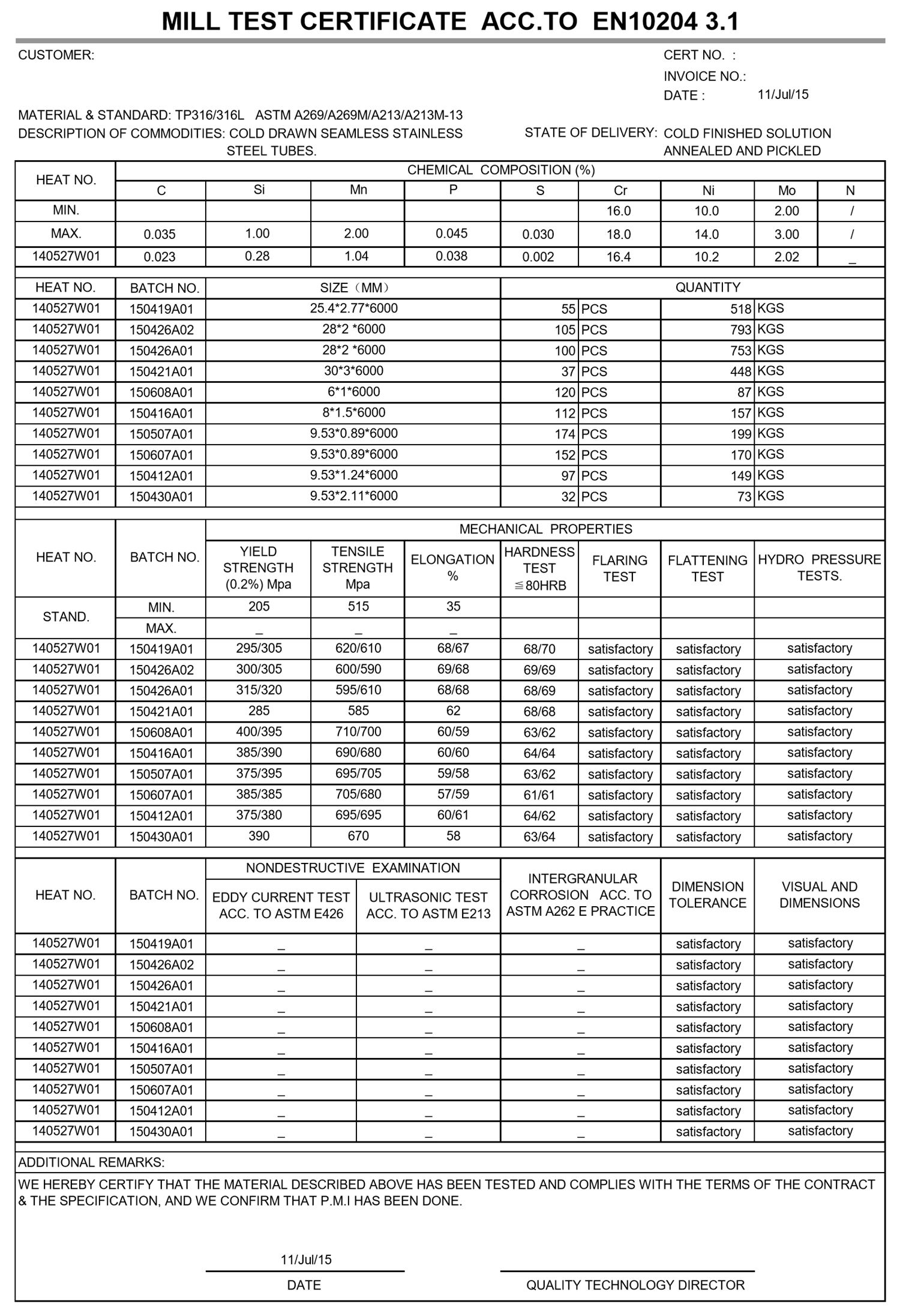
Our stainless steel tube is supplied with an EN 10204 3.1 mill test certificate as standard. That is the manufacturer’s own certificate, validated by an inspection representative independent of the production department — the document most oil and gas, refinery and marine contracts call for, and it is issued against the heat, not against the delivery. A 3.2, countersigned by an inspector you or your client nominates, can be arranged where the contract demands it. Say so before the order in that case: a 3.2 has to be raised while the heat is still identifiable, not after the tube has shipped. Our stainless tube is made by Dural.
SS316 or SS316L?
One decision drives it: whether the tube gets welded.
| SS316 / TP316 | SS316L / TP316L | |
|---|---|---|
| Carbon content | 0.08% max | 0.03% max |
| Weldability | Good | Better — the lower carbon reduces the risk of carbide precipitation during welding, which can otherwise cause corrosion and intergranular attack |
| Corrosion resistance | Excellent in marine, chemical and pharmaceutical service | Excellent, and slightly better in some service because of the lower carbon |
| Ductility | High | Higher when annealed |
| Typical use | High strength and corrosion resistance — marine, chemical processing, medical devices | Extensive welding, or corrosive service where carbide precipitation must be minimised — welded components in chemical plant and pharmaceutical equipment |
If the tubing will be welded during fabrication, specify SS316L. Carbon has to be at 0.03% maximum for a tube to be certified dual spec as SS316/316L — which is what we stock, so one tube satisfies both callouts.
Chemical composition and mechanical properties
The limits the standard sets, and what a mill certificate has to land inside.
Chemical composition limits — UNS S31600 (TP316) and S31603 (TP316L), as referenced by ASTM A269. Percent by weight.
| Element | TP316 / SS316 | TP316L / SS316L |
|---|---|---|
| Carbon (C) | 0.08 max | 0.035 max |
| Chromium (Cr) | 16.0 – 18.0 | 16.0 – 18.0 |
| Nickel (Ni) | 10.0 – 14.0 | 10.0 – 14.0 |
| Molybdenum (Mo) | 2.00 – 3.00 | 2.00 – 3.00 |
| Manganese (Mn) | 2.00 max | 2.00 max |
| Silicon (Si) | 1.00 max | 1.00 max |
| Phosphorus (P) | 0.045 max | 0.045 max |
| Sulphur (S) | 0.030 max | 0.030 max |
Carbon is the only element that separates the two grades. Molybdenum is the one that earns SS316 its reputation, and our MO2.5 tube is supplied to a minimum 2.5% molybdenum content, above the standard’s 2.00% floor — which is what lifts corrosion resistance for petrochemical, oil and gas and marine service. ASTM A213 lists the same elements with slightly different limits on some of them, so where a single element is critical to your specification, ask us for the actual heat analysis rather than working from the table.
Mechanical requirements — the specified minima in the annealed condition, per ASTM A269.
| Property | TP316 / SS316 | TP316L / SS316L |
|---|---|---|
| Tensile strength, min | 515 MPa · 75 ksi | 485 MPa · 70 ksi |
| Yield strength (0.2%), min | 205 MPa · 30 ksi | 170 MPa · 25 ksi |
| Elongation in 50 mm, min | 35% | 35% |
| Hardness, max | 90 HRB | 90 HRB |
Why the hardness cap matters
The 90 HRB maximum is not a formality. A compression joint works because the ferrule bites into the tube wall, so the tube has to be softer than the ferrule. Tube that is over‑hard, or work‑hardened by cold drawing without a final anneal, will not let the ferrule swage in properly — and the joint leaks once vibration finds it.
That is why we hold annealed tube, and why the hardness figure is worth reading off the certificate before you commit a run to ferrule fittings or compression fittings.
Reading the certificate
These are minima and maxima, not the numbers you will get. A certificate for a sound heat normally sits comfortably above the tensile and yield floors and well under the hardness cap.
What you are checking is that every figure falls inside the band — and that the heat number on the paper matches the heat number rolled into the tube. If either of those fails, the material is not to standard whatever the invoice says.
Not sure what you are looking at? Send us the certificate and we will read it with you.
The three finishes
Chosen on how much the surface matters to the job.
Annealed and pickled (AP)
Seamless tube with a matt surface. Used throughout industrial projects where appearance is not critical.
Annealing reduces the hardness of the material through a heating process that increases ductility — so an AP tube is easier to bend and manipulate. Pickling gives a purer surface, removing contaminants, stains and rust.
Polished 320 grit
A shiny surface, specified where the tube will be seen. Used by OEMs building panels and analyser houses, where aesthetic appearance is part of the project consideration.
Bright annealed (BA)
Also a shiny surface. Like 320 grit, it is the choice for panel work and analyser housings where the finish has to look clean at all times.
SS316/316L tubes suit medium to long term service — projects and equipment alike. Because they come in several appearances they work indoors or outdoors, made either as aesthetically pleasing as possible or simply to do the job. The material gives longevity, ductility and hardness together, which is why these tubes are the industry standard for refinery and offshore oil and gas projects.
Tolerance charts
Made to ASTM A213/A269, there is a specific tolerance to meet so the tube installs properly with compression end fittings.
Outer diameter tolerance
| Tube outer diameter | Tolerance |
|---|---|
| 4 mm to 35 mm | ± 0.08 mm |
| 35 mm to 38 mm | ± 0.15 mm |
| 38 mm to 60 mm | ± 0.20 mm |
| 60 mm and above | ± 0.25 mm |
Wall thickness tolerance — A269 and A213 differ. ASTM A269 permits a variation of ±10%. ASTM A213 offers two options:
| ASTM A213 option | Maximum wall thickness | Minimum wall thickness |
|---|---|---|
| Minimum wall thickness (MWT) | 20% | 0% |
| Average wall thickness (AWT) | 10% | 10% |
Our standard option is ±10%, which complies with both ASTM A269 and A213. Common practice and ready stock in the market is average wall thickness, for cost reasons. Minimum wall thickness is available on request, with a minimum quantity.
Both SS316 and SS316L tubes are MO2.0 and MO2.5 standards. MO2.5 tubes hold the minimum 2.5% molybdenum content that raises resistance to corrosion, and are specified for more corrosive service — petrochemical, oil and gas, and marine.
Sizes, wall thicknesses and tube weight
The OD and wall combinations that come up most, and a calculator for the weight.
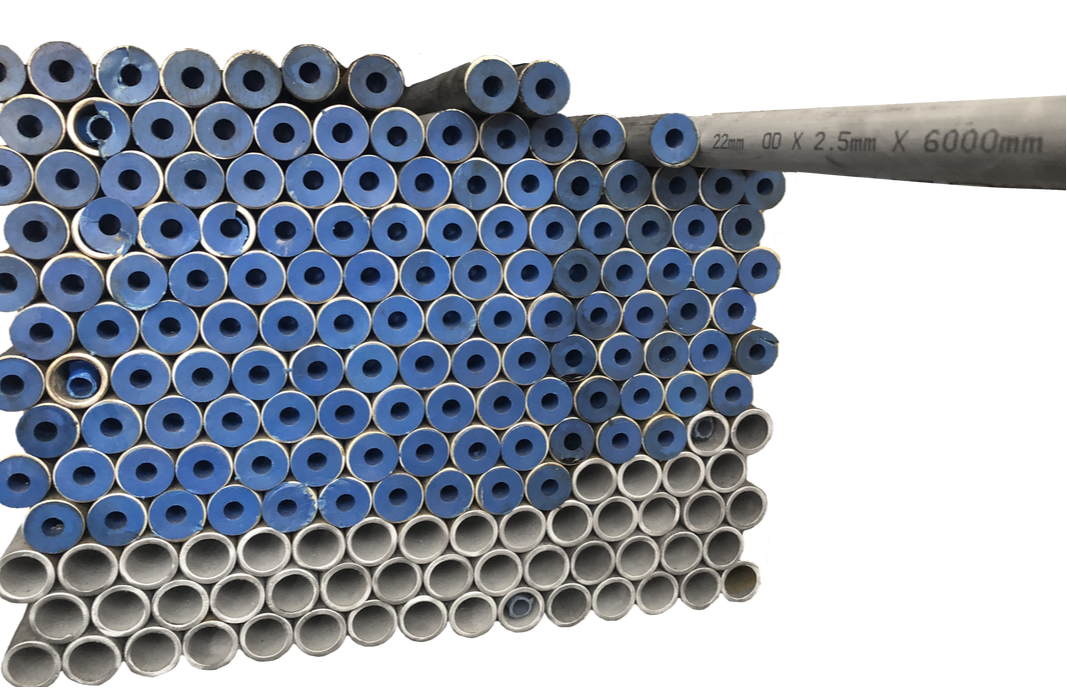
We hold 4 mm to 60 mm OD, which in imperial terms is 1/4" to 2" OD. Within that range the wall thickness is a separate decision, and it is the wall — not the OD — that sets the pressure a run will take and the fitting that will suit it. The combinations below are the ones specified most often on instrument and process work to ASTM A269/A213.
| Outer diameter | Wall thicknesses commonly specified | Nearest imperial OD |
|---|---|---|
| 6 mm | 1.0 · 1.5 mm | 1/4" |
| 8 mm | 1.0 · 1.5 mm | 5/16" |
| 10 mm | 1.0 · 1.5 · 2.0 mm | 3/8" |
| 12 mm | 1.0 · 1.5 · 2.0 mm | 1/2" |
| 16 mm | 1.5 · 2.0 mm | 5/8" |
| 20 mm | 1.5 · 2.0 · 2.5 mm | 3/4" |
| 22 mm | 2.0 · 2.5 mm | 7/8" |
| 25 mm | 2.0 · 2.5 · 3.0 mm | 1" |
| 28 mm | 2.0 · 2.5 · 3.0 mm | 1 1/8" |
| 32 mm | 2.0 · 2.5 · 3.0 mm | 1 1/4" |
| 38 mm | 2.5 · 3.0 mm | 1 1/2" |
| 50 mm | 2.5 · 3.0 mm | 2" |
| 60 mm | 3.0 mm | 2 3/8" |
This is a guide to what gets specified, not a stock list — holdings move week to week and other walls are available. Send the OD and wall you need and we will confirm what is on the floor. Full dimension tables are in the Dural catalogue.
SS316 tube weight calculator
Enter the outer diameter, the wall thickness and the metres you need. Useful for a freight estimate, a lifting plan, or checking a quoted weight before you pay for it.
Bending, welding and installation
What the material will take, and what to watch on the surface.
Bending and welding
- A maximum bend radius of 3× the external tube diameter is recommended for cold bending of SS316 and SS316L tube, including bending by hand.
- These tubes are very suitable for arc welding, easily done with the proper equipment and technique.
- High ductility means the tube is easily manipulated and can be placed in many positions and orientations, as long as it is attached properly.
- Fit to single or double ferrule fittings, to compression fittings, or weld it.
- Combine with pipe clamps to keep vibration down where there is higher pressure inside the tube.
Why the surface matters
Tube and ferrule hardness together form a correct and successful compression joint, and ensure the ferrules can swage onto the tube.
The critical part is the tube surface, which is the sealing mechanism. Any scratch or damage to the tube surface can affect the installation and leave the tubing performing poorly.
Which is why the ends arrive capped and the tube is handled in its bundle until it is cut.
Applications
Where SS316 stainless steel tube earns its place.
Chemical processing
SS316 stainless steel tubes are widely used in chemical processing plants for transporting corrosive chemicals, acids and solvents. Their resistance to corrosion and high temperatures suits the production, storage and transportation of chemicals including sulfuric acid, hydrochloric acid and caustic soda.
Oil and gas
Used on offshore platforms, refineries and pipelines for conveying crude oil, natural gas and petrochemical products. Durability and corrosion resistance in harsh environments make them essential in drilling equipment, heat exchangers and piping systems.
Marine
Well suited to marine service because of resistance to corrosion in seawater. Used in shipbuilding, offshore structures and marine equipment such as propeller shafts, heat exchangers and seawater desalination plants.
Heat exchangers and HVAC
Common in heat exchangers, boilers and HVAC systems for transferring heat and fluids in commercial and industrial facilities. Thermal conductivity, corrosion resistance and durability give efficient heat transfer and long‑term performance.
Why buy stainless steel tube from RFS Hydraulics
Six things that decide whether a tube order goes smoothly.
Ready stock, not ordered in
We stock across the 4 mm to 60 mm range in Johor Bahru and Singapore rather than buying in against your enquiry, and stock items dispatch the same or next working day. Wall thickness availability moves week to week, so send the OD and the wall and we will confirm what is actually on the floor.
Dual certified 316/316L
Our tube is certified dual spec SS316/316L at 0.03% carbon maximum, so one length satisfies a 316 callout or a 316L callout. You do not have to hold two grades to cover both.
3.1 certificate as standard
An EN 10204 3.1 mill test certificate comes with the tube, and the heat number is marked continuously along the length rather than on the bundle tag — so the paper can still be matched to an offcut months later.
Quoted in two working hours
A product specialist prices it, whether that is one length or a full bill of materials. No ticket queue, and the person who answers follows it through.
The fittings and clamps as well
Tube is rarely bought on its own. We stock the compression fittings, ferrule fittings and pipe clamps that go with it, so the run arrives as one delivery from one supplier.
Technical help before you order
Send a drawing, a photo of an existing tube marking, or a bill of materials. We will work the specification out with you rather than asking you to arrive with a part number. More about RFS Hydraulics.
Delivery within Malaysia is already inside the price. Payment terms, the exchange window and the claim period are published in full — see the FAQ or the terms and conditions.
Watch the tube
Stainless steel tube, in the warehouse.
Frequently asked questions
Ten, from grade selection through certification to delivery.
Can SS316 stainless steel tubes be used in seawater environments?
Yes. SS316 stainless steel tubes are highly resistant to corrosion in seawater environments, which makes them ideal for marine applications and offshore structures. For more corrosive service, specify the MO2.5 grade with its minimum 2.5% molybdenum.
Should I order SS316 or SS316L?
If the tube will be welded during fabrication, specify SS316L — the lower carbon reduces carbide precipitation. Our stock is certified dual spec SS316/316L, so one tube satisfies either callout.
What wall thickness tolerance do you supply as standard?
±10%, which complies with both ASTM A269 and ASTM A213. That is average wall thickness (AWT), the common market practice and what is held in ready stock. Minimum wall thickness (MWT) is available on request, subject to a minimum quantity.
Do you supply a mill test certificate with stainless steel tube?
Yes. Our stainless steel tube comes with an EN 10204 3.1 mill test certificate as standard — the mill’s own chemical analysis and mechanical test results for the heat your tube was rolled from, validated by an inspection representative independent of production. An EN 10204 3.2, countersigned by a nominated third‑party inspector, can be arranged if your contract requires it; ask before the order, because it has to be raised against the heat before the tube ships. Every length is marked with its heat number continuously along the tube, so traceability holds even after the bundle is broken and cut. See material certification and traceability for a sample.
What is the chemical composition of SS316 and SS316L tube?
To ASTM A269: chromium 16.0–18.0%, nickel 10.0–14.0%, molybdenum 2.00–3.00% in both grades. The difference is carbon — 0.08% maximum for TP316 against 0.035% maximum for TP316L. Full table, with manganese, silicon, phosphorus and sulphur, is under chemical composition and mechanical properties.
What is the tensile strength of ASTM A269 stainless steel tube?
The specified minima in the annealed condition are 515 MPa (75 ksi) tensile and 205 MPa (30 ksi) yield for TP316, and 485 MPa (70 ksi) tensile and 170 MPa (25 ksi) yield for TP316L. Elongation is 35% minimum in 50 mm and hardness is capped at 90 HRB. A certificate for a sound heat normally sits well above the strength floors.
How do I work out the weight of a stainless steel tube?
kg/m = 0.02507 × wall × (OD − wall), with both dimensions in mm, taking the density of SS316/316L as 7.98 g/cm³. A 12 mm OD tube with a 1.5 mm wall works out at 0.395 kg/m. Use the tube weight calculator on this page to run your own sizes.
What are the typical lead times for SS316 stainless steel tubes?
Lead times vary with size, quantity and any customisation. We hold 4 mm to 60 mm in ready stock in 6 metre lengths — send the sizes and quantities and a product specialist will confirm availability within two working hours. On an urgent stocked item, order to physical delivery can be under 3 working days. See the main FAQ for delivery times, order terms and payment.
How does SS316 stainless steel compare to other stainless steel grades?
SS316 offers superior corrosion resistance compared to SS304, and is usually preferred where there is exposure to chloride‑rich environments or aggressive chemicals. The molybdenum content is what gives it the edge — SS304 has none.
What maintenance practices are recommended for SS316 stainless steel tubes?
Regular cleaning with mild detergents and periodic inspection for signs of corrosion or damage are recommended to maintain the performance and longevity of SS316 stainless steel tubes.
Catalogue
Full dimension and wall thickness tables. Direct PDF download — no form, no email address.
It is a large file at 40 MB — worth downloading on wi‑fi. Sizes and wall thicknesses are in the catalogue; stock and price are not, so send us the list and we will confirm both.
Related: stainless steel pipes · hydraulic steel tubes · compression fittings · ferrule fittings · pipe clamps · about Dural
Send the OD, the wall and the total metres.
One length or a full bill of materials — priced by a product specialist within two working hours.